March 18, 2026
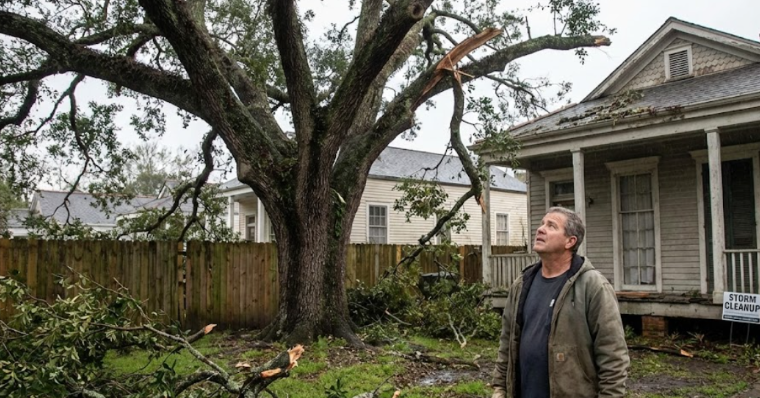
After a major storm passes through New Orleans, assessing tree damage on your property is a critical safety priority. Hurricane season, tropical storms, and severe weather events can cause significant damage to even the healthiest trees. Understanding how to respond properly protects your family, your property, and your investment in your landscape.
This guide provides homeowners with a clear action plan for identifying hazards, documenting damage, and working with professional arborists to safely restore their property. Whether you’re dealing with minor branch damage or complete tree failure, following the right steps ensures the best possible outcome.
Our team consists of Louisiana Licensed Arborists, a mandatory state credential required by the Louisiana Department of Agriculture and Forestry (LDAF) to ensure all tree surgery meets strict safety and competency standards. We specialize in storm damage assessment, emergency tree removal, and tree preservation services. With years of experience handling post-storm recovery throughout the metro area, our goal is to help you navigate this challenging time safely and efficiently while preserving as many trees as possible.
Key Takeaways
- Safety first: Stay at least 50 feet away from downed power lines and damaged trees until professionals arrive.
- Document all damage: Take multiple photos from different angles before any cleanup begins for insurance claims.
- Don’t attempt DIY removal: Large branches and damaged trees require professional equipment, training, and insurance.
- Get a professional assessment: Certified arborists utilize the LSU AgCenter’s Storm-Damaged Tree Guide to perform a professional risk assessment and determine if a tree is a ‘keeper’ or a ‘borderline’ case.
Step 1: Immediate Safety Checklist After the Storm
Your family’s safety is the top priority after any storm. Before you begin assessing damage or planning cleanup, you must secure your property and eliminate immediate threats. Many homeowners underestimate the dangers present after severe weather, leading to preventable injuries and fatalities each year.
Check for Downed Power Lines
Downed power lines represent the most dangerous hazard after a storm. Electricity and water create a lethal combination, and New Orleans’ heavy rainfall means saturated ground conditions persist for days after storms pass.
Critical safety protocols:
- Stay at least 50 feet away from any downed lines or anything touching them
- Immediately call the Entergy New Orleans Outage Center to report any tree in contact with a power line; never approach the area until utility crews confirm it is de-energized.
- Assume all lines are live and dangerous, even if they’re not sparking or making noise
- Never touch branches, debris, fences, or standing water that may be in contact with power lines
- Keep children and pets indoors until utility companies have cleared all downed lines
- Do not attempt to move debris near power lines yourself
Establish a Safe Zone
Once you’ve confirmed there are no power line hazards, establish clear boundaries around dangerous trees and damaged areas.
Property security measures:
- Use bright caution tape or rope to block access to all damaged trees
- Keep everyone at least 20 feet away from leaning trees
- Mark areas beneath trees with hanging branches
- Block access to trees with visible trunk damage or cracks
- Keep the entire yard off-limits to children and pets until a professional inspection confirms it’s safe
- Post visible warning signs if you have frequent visitors or delivery personnel
Watch for Hidden Hazards
Storm damage creates numerous secondary risks that may not be immediately obvious during your initial property assessment.
Additional dangers to consider:
- Unstable ground conditions: Saturated soil loses its load-bearing capacity and can collapse unexpectedly under weight
- Displaced wildlife: Snakes, wasps, hornets, and fire ants seek refuge in debris piles and fallen trees
- Sharp debris: Broken branches create spear-like hazards, and torn wood produces splinters that can cause serious puncture wounds
- Compromised structures: Fences, sheds, and other structures may have hidden damage that could cause collapse.
- Sinkholes and voids: Heavy rain can wash out soil beneath the surface, creating hidden cavities
- Contaminated water: Standing water may contain sewage, chemicals, or other hazardous materials
Step 2: How to Assess and Document the Damage
Once you’ve secured the immediate area and confirmed basic safety, you can begin documenting damage from a safe distance. This documentation serves two critical purposes: it provides essential information for professional arborists who will assess your trees, and it creates the evidence you need for insurance claims.
Take Complete Photographs
Insurance companies require thorough documentation to process claims efficiently. Poor documentation often results in claim denials or reduced payouts.
Comprehensive photo documentation checklist:
- Take wide-angle shots showing the entire property and storm damage context
- Photograph each damaged tree from all four sides (north, south, east, west)
- Get close-ups of specific damage points, including cracks, breaks, exposed roots, and torn bark
- Show the relationship between damaged trees and structures such as your house, garage, fence, and vehicles
- Include photos of debris on roofs, cars, driveways, or other property
- Photograph any damage to structures caused by trees or branches
- Use your phone’s timestamp and GPS features to verify when and where photos were taken
- Take video walkthroughs narrating what you’re seeing
- Photograph the same areas from multiple angles to provide complete coverage
When to Call a Professional Arborist Immediately
Certain situations require immediate professional intervention. Attempting to handle these scenarios yourself can result in serious injury, death, or significant property damage.
Emergency Situations
Contact a certified arborist immediately if you observe any of the following conditions:
- Trees leaning at any angle toward occupied structures, including your house, garage, or neighbor’s property
- Trees in contact with or leaning toward power lines or utility infrastructure
- Large branches exceeding 6 inches in diameter hanging in the tree canopy
- Visible cracks or splits in the main trunk, regardless of size
- Lifted root plate with soil mounding, heaving, or cracking on one side
- Trees blocking driveways, streets, or emergency access routes
- Any tree that creates an immediate threat to people or property
- Multiple trees are down across the property, requiring complex removal sequencing
Why Professional Assessment is Critical
Safety and Expertise
Storm-damaged trees behave unpredictably. Forces within the tree create tension and compression that can cause sudden, violent failure during cutting operations.
Professional arborist training includes:
- Advanced understanding of tree biomechanics and structural failure patterns
- Experience in identifying hidden damage, including internal decay, root failure, and weak branch attachments
- Knowledge of species-specific characteristics and how different trees respond to storm damage
- Risk assessment protocols that evaluate the likelihood and consequences of failure
- Understanding of appropriate intervention strategies for various damage types
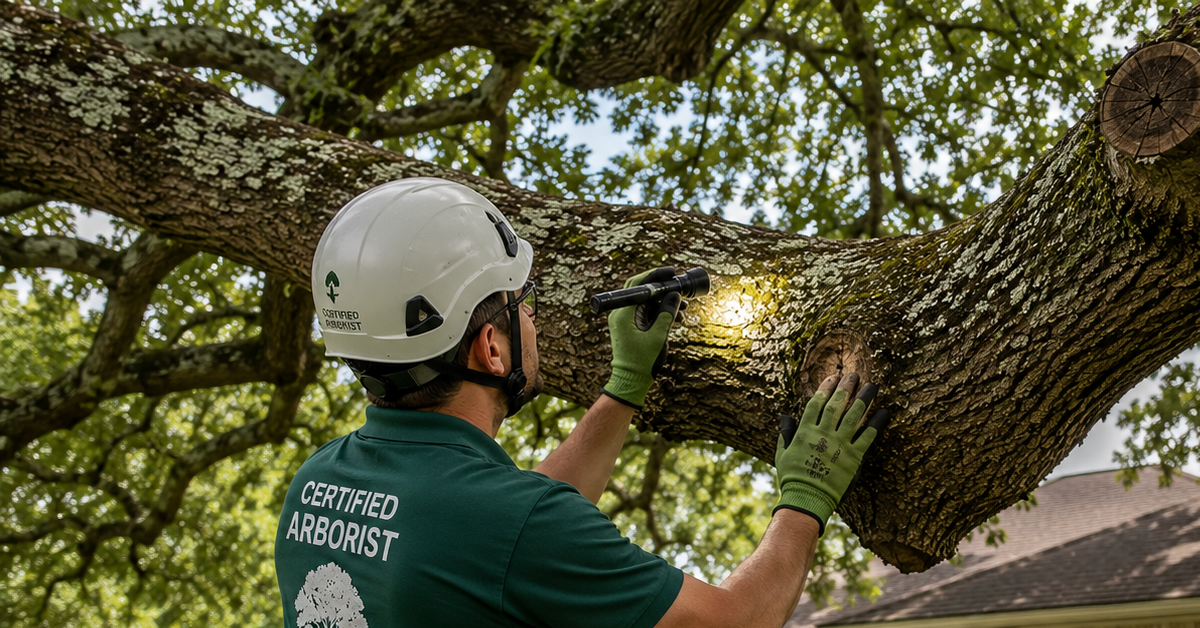
A Perfect Cut’s certified arborists conduct thorough inspections using industry-standard assessment protocols. We evaluate not just the obvious damage but also look for underlying conditions that may not be immediately visible. This comprehensive approach ensures we identify all risks and develop appropriate solutions.
Specialized Equipment
Professional tree removal requires substantial investment in specialized equipment. This equipment makes complex removals possible while protecting workers and property.
Professional equipment includes:
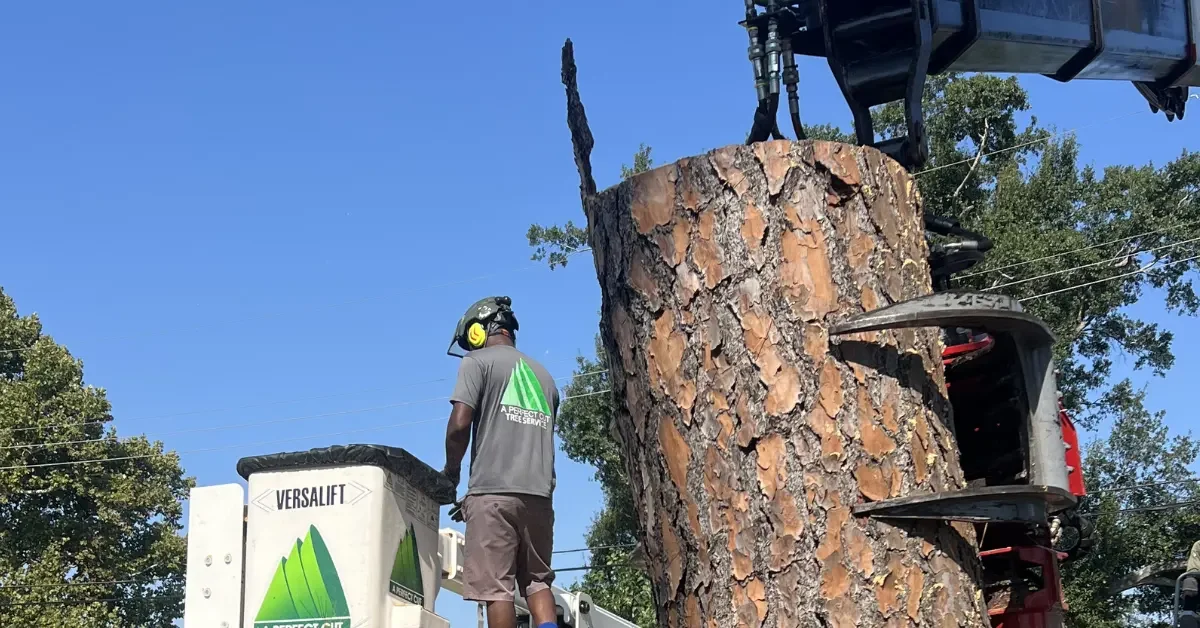
- Bucket trucks and aerial lifts: Provide safe access to heights up to 75 feet
- Cranes: Handle extremely large trees or those in tight spaces near structures
- Rigging systems: Control the descent of heavy branches and trunk sections
- Professional chainsaws: Commercial-grade saws designed for demanding conditions
- Chippers: Process branches and debris up to 18 inches in diameter
- Stump grinders: Remove stumps below grade for complete site restoration
- Safety equipment: Climbing harnesses, ropes, helmets, and protective gear
Our fleet includes the latest technology in arboricultural equipment. This allows us to execute complex removals that preserve surrounding landscape elements, structures, and other trees while maintaining the highest safety standards.
Full Insurance Protection
Insurance protection is non-negotiable when hiring tree service providers. Uninsured or underinsured companies create enormous liability for property owners.
A Perfect Cut maintains:
- Comprehensive general liability insurance covering property damage
- Workers’ compensation insurance for all employees
- Vehicle and equipment insurance
- Proper licensing and bonding
- Compliance with all OSHA safety regulations
This insurance protects you from financial responsibility if accidents occur on your property. If an uninsured worker is injured while working on your trees, you could be held liable for medical expenses, lost wages, and permanent disability costs.
Tree Preservation Focus
Not every damaged tree requires removal. Our philosophy prioritizes preservation whenever it can be done safely. Mature trees provide enormous value to your property and take decades to replace.
Tree preservation benefits:
- Mature trees can add $10,000-$20,000 to property value
- Established trees provide irreplaceable shade and energy savings
- Large trees are significant carbon sinks and air quality improvers
- Mature specimens contribute to neighborhood character and curb appeal
- Preserving trees avoids the cost and time required to establish new plantings
Our certified arborists have advanced training in tree preservation techniques. We assess structural integrity, evaluate long-term viability, and recommend appropriate interventions to extend tree life whenever conditions permit. Many trees that homeowners assume must be removed can actually be saved with proper treatment.
The Professional Recovery Process: What to Expect
Understanding the professional tree service process helps you know what to expect and ensures you’re getting quality service.
Step 1: Free On-Site Inspection and Estimate
Every project begins with a thorough on-site assessment by a certified arborist.
Inspection includes:
- Complete evaluation of all damaged trees and vegetation
- Assessment of potential hazards and risk factors
- Determination of which trees can be saved versus which require removal
- Identification of hidden damage, including internal decay, compromised roots, and structural defects
- Explanation of recommended solutions in clear, understandable language
- Detailed written estimate with itemized pricing for all proposed work
- Timeline for completion and scheduling information
- Answers to all your questions and concerns
This inspection and estimate is provided at no cost and creates no obligation. You receive complete information about your situation and what needs to be done, allowing you to make informed decisions about how to proceed.
Step 2: Developing Your Action Plan
Based on the inspection findings, we create a customized plan addressing your specific situation.
For Trees That Can Be Saved
Many damaged trees are structurally sound and can recover with appropriate care:
- Corrective pruning: Remove damaged branches using proper arboricultural techniques that promote healing and healthy regrowth
- Cable and brace systems: Install flexible steel cables or rigid braces to support weak branch attachments and reduce failure risk
- Root zone care: Address soil compaction, improve drainage, and ensure proper growing conditions
- Wound treatment: Clean torn bark and properly cut broken branches to minimize decay entry
- Health monitoring: Establish follow-up inspection schedules to track recovery and identify any developing problems
- Fertilization programs: Support recovery with appropriate nutrient supplementation
Each preservation treatment plan is customized based on tree species, age, overall health, and specific damage patterns.
For Trees That Must Be Removed
Trees with irreversible structural failure or presenting unacceptable risk require professional removal:
- Safety planning: Identify all risks and develop detailed removal sequences
- Equipment staging: Position trucks, cranes, chippers, and other equipment for optimal efficiency and safety
- Section-by-section removal: Dismantle trees from top to bottom in manageable pieces
- Rigging operations: Use rope systems to control the descent of heavy sections
- Precision cutting: Execute cuts in proper sequence to prevent dangerous movement
- Structure protection: Protect roofs, siding, landscaping, and other property elements throughout the process
Complex removals near structures or power lines require advanced technical skills and specialized equipment. Our crews receive ongoing training in the latest removal techniques and safety protocols.
Step 3: Debris Processing and Cleanup
Complete cleanup is standard with every job we perform:
- Cut large logs into manageable sections for removal or firewood if desired
- Process all branches through commercial chippers, converting them to mulch
- Haul away all debris unless you want to keep mulch for landscaping
- Rake and clear the entire work area
- Remove all sawdust and small debris
- Perform final inspection to ensure nothing is missed
- Leave your property cleaner than we found it
Our commitment to thorough cleanup is reflected in our customer reviews. We understand that having tree work done is disruptive, and we minimize that disruption by completing cleanup as part of every project.
Step 4: Stump Grinding and Site Restoration
Complete tree removal includes stump elimination and site preparation:
- Stump grinding: Use commercial grinders to reduce stumps to 6-12 inches below ground level
- Backfill: Fill depressions with soil, wood chips, or other appropriate material
- Site grading: Level areas to match the surrounding grade
- Replanting advice: Provide recommendations for new trees if desired
- Aftercare plans: Establish maintenance schedules for preserved trees
Stump removal is essential for complete site restoration and prevents sprouting, pest problems, and tripping hazards.
Preparing Your Trees for Future Storms
Proactive tree maintenance significantly reduces storm damage risk. Regular care is far more cost-effective than emergency response.
Regular Pruning and Maintenance
Proper pruning strengthens tree structure and reduces wind resistance:
- Crown thinning: Selectively remove branches throughout the canopy to allow wind to pass through rather than creating resistance
- Deadwood removal: Eliminate dead or dying branches before they become hazards
- Weight reduction: Shorten long, heavy limbs that create excessive leverage during wind events
- Structural pruning: Correct weak branch attachments, co-dominant stems, and poor architecture
- End weight reduction: Remove heavy foliage concentrated at branch ends that acts like a sail in the wind
Professional pruning follows ANSI A300 standards and never removes more than 25% of the living crown in a single season. Over-pruning (topping or lion-tailing) actually makes trees more vulnerable to storm damage.
Annual Health Inspections
Regular professional inspections catch problems before they become emergencies:
- Decay detection: Identify internal rot using visual assessment, sounding, and sometimes resistance drilling
- Pest and disease management: Diagnose insect infestations and pathogen infections in early stages when treatment is most effective
- Root system evaluation: Check for girdling roots, root rot, and soil compaction issues
- Structural monitoring: Track cracks, weak attachments, lean angles, and other structural concerns over time
- Growth pattern assessment: Ensure trees are developing proper structure as they mature
Problems identified during routine inspections can often be corrected with minimal intervention. Waiting until damage occurs is always more expensive than preventive care.
Smart Planting Decisions
Choosing appropriate species and proper planting techniques creates storm-resistant landscapes:
Best Trees for New Orleans Storm Resistance
- Live oak (Quercus virginiana): Deep, spreading root systems and dense, strong wood
- Bald cypress (Taxodium distichum): Flexible trunk and branches, excellent wind resistance
- Southern magnolia (Magnolia grandiflora): Strong wood and good structural characteristics
- Sweetgum (Liquidambar styraciflua): Deep taproot provides excellent anchorage
Proper Planting Practices
- Plant at the correct depth with the root flare visible at the soil surface
- Choose locations providing adequate space for the mature size
- Avoid planting large trees near structures, power lines, or septic systems
- Ensure proper soil drainage and avoid compacted sites
- Provide appropriate watering during the establishment period (first 2-3 years)
- Begin structural pruning when trees are young to develop strong architecture
- Use proper mulching techniques (2-3 inch depth, kept away from trunk)
Investing in proper planting pays dividends for decades. Well-planted, appropriate species require less maintenance and provide better storm resistance throughout their lives.
Frequently Asked Questions About Storm Damage
How do I know if a storm-damaged tree is unsafe to approach?
Stay back if the tree has a new lean, hanging limbs, cracked wood, or soil lifting around the base. These signs mean the tree can fail without warning. Keep at least 20 to 30 feet away and do not walk under the canopy. Call a certified arborist for a proper inspection before doing any cleanup.
Will my homeowners’ insurance pay for removing storm-damaged trees?
Insurance usually covers removal when the tree hits a covered structure such as a house, garage, or fence. It may also cover debris removal needed to reach the structure. If the tree falls in the yard without causing damage, coverage is less likely. Take photos before cleanup and call your insurer to confirm your policy rules.
Can a damaged tree be saved after a storm?
Some trees recover if the trunk and root system are still sound. A certified arborist can prune broken limbs, clean wounds, and reduce weight to stabilize the canopy. Severe trunk splits, uprooting, or large structural failures usually require removal. A preservation assessment helps you choose the safest and most cost-effective option.
How quickly should I call for emergency tree service after a storm?
Call immediately if the tree threatens a roof, driveway, power line, or walkway. Fast action reduces the risk of further damage and helps with insurance claims. For non-critical damage, schedule an inspection within 24 to 72 hours. Early assessment prevents hidden hazards from worsening.
What should I photograph for an insurance claim after tree damage?
Take wide shots of the whole property, then close-ups of breaks, cracks, uprooted sections, and damage to structures. Capture each tree from multiple angles and include timestamps. Video walk-throughs help insurers see the full situation. Store copies in your phone, cloud storage, and email so nothing gets lost.
Take Action on Your Storm Damage
Storm-damaged trees create serious safety hazards that worsen over time. Hanging branches become more unstable, cracks propagate deeper, and leaning trees settle into more dangerous positions. Taking action quickly protects your family and property while often reducing overall costs.
Get Your Free Estimate
Don’t risk your safety or property attempting DIY tree removal. Storm-damaged trees are unpredictable and dangerous. Our certified arborists have the training, equipment, insurance, and experience to handle any storm damage situation safely and efficiently.
Call now or visit www.aperfectcuttree.com
We serve all of New Orleans and surrounding communities, including Metairie, Kenner, Slidell, and the Northshore. Our local teams understand the unique challenges of tree care in Southeast Louisiana and respond quickly to your emergency needs.
Trust A Perfect Cut Tree Service for professional storm damage assessment and recovery. Let us help you restore safety and beauty to your property.