July 23, 2026
Key Takeaways
- Growing Risk Over Time: A hazardous tree does not stay the same; decay, root damage, and structural weakness typically worsen the longer removal is delayed.
- Hurricane Season Exposure: Metairie sits directly in the path of Gulf Coast hurricane season, which runs June through November, making early removal critical rather than optional.
- Higher Costs After Damage: Emergency removal after a tree falls on a structure, vehicle, or power line is far more expensive and disruptive than scheduled removal.
- Insurance and Liability Complications: Damage from a tree already known to be hazardous can affect insurance claims and homeowner liability.
Every year, homeowners across Metairie, Louisiana identify a tree that looks unhealthy, leaning, or damaged, and every year, some of those same homeowners decide to “wait until after storm season” to deal with it. It’s an understandable instinct: removal costs money, schedules are busy, and the tree may still look fine from the street. But for a tree already flagged as hazardous, waiting through hurricane season is one of the riskiest decisions a homeowner can make. The trees that were already hazardous before a storm are almost always the ones that cause property damage, power outages, or injury once severe weather arrives. This article breaks down what actually happens to a hazardous tree if removal is delayed, why Metairie’s storm season makes this especially risky, and what homeowners should do instead.
Why Metairie’s Storm Season Raises the Stakes
Metairie and the broader Jefferson Parish and New Orleans area sit in one of the most storm-exposed regions in the country. The Atlantic hurricane season runs from June 1 through November 30, and even storms that don’t make direct landfall nearby can bring sustained winds, heavy rain, and saturated soil conditions that stress already-weakened trees. A tree that has stood without incident for years can fail during a single high-wind event if it has underlying structural problems. For a tree already identified as hazardous through visible decay, leaning, cracked limbs, root damage, or disease the combination of high winds and saturated ground during storm season is often the exact trigger that causes failure.
What Actually Happens When Removal Is Delayed
1. Structural Problems Continue to Worsen
Decay, disease, and root damage are progressive. A tree with early-stage internal rot does not pause its decline while a homeowner waits for a more convenient time. Fungal decay continues to spread through the trunk and root system, root damage from soil compaction or construction continues to reduce anchorage, and cracks in major limbs or the trunk continue to widen under normal wind loading. By the time storm season arrives, a tree that was borderline hazardous in spring may be significantly more dangerous by late summer or fall.
2. Saturated Soil Reduces Root Stability
Louisiana’s heavy seasonal rainfall saturates soil, which reduces the soil’s ability to hold root systems in place. A tree with already compromised roots from prior storm damage, construction, disease, or age is far more likely to uproot entirely in saturated soil during high winds, rather than simply losing a limb. Full uprooting is more destructive and more dangerous than a limb failure, and it is much more likely to happen to a tree whose root system was already flagged as a concern.
3. Increased Risk to Structures, Vehicles, and People
Hazardous trees near homes, driveways, or power lines pose a direct risk to property and safety if they fail during a storm. A tree that could have been safely removed on a calm, dry day becomes vastly more dangerous to work around once it has already partially failed or is actively swaying under storm conditions. Emergency crews responding after a storm often cannot access, assess, or safely remove a fallen or partially fallen hazardous tree with the same precision as a planned removal.
4. Emergency Removal Costs More
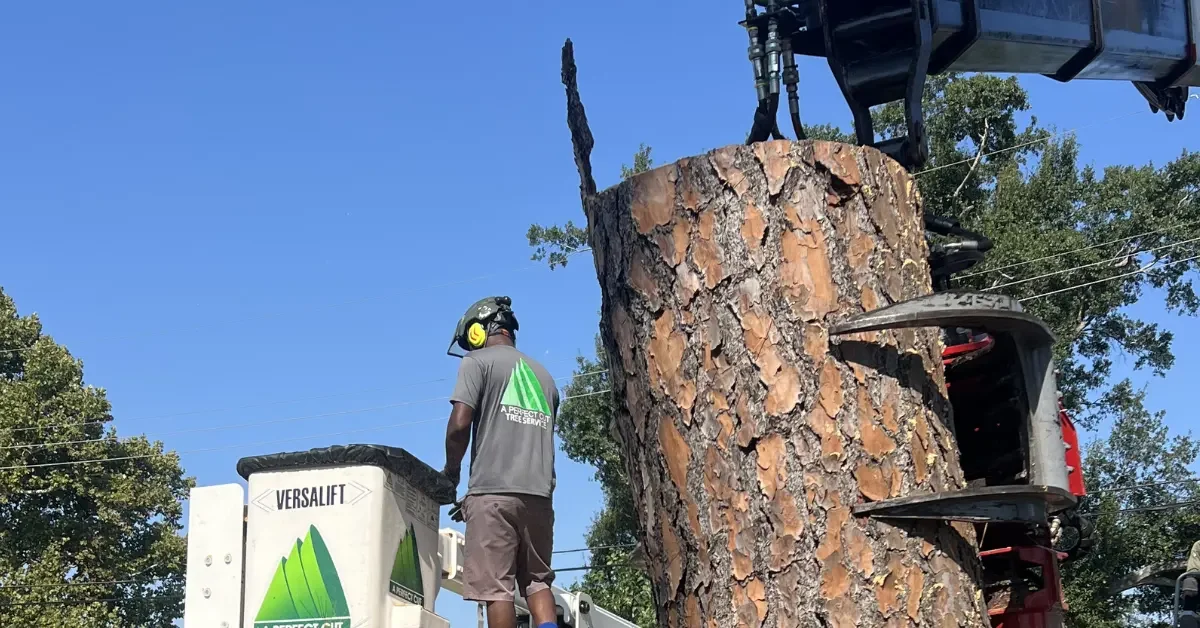
Scheduled removal of a standing hazardous tree, performed with proper equipment and planning, is almost always less expensive than emergency removal after a storm. Emergency work often involves cutting a tree already tangled in power lines, resting on a structure, or blocking a driveway or street, which requires additional equipment, coordination with utility companies, and higher-risk techniques. Demand for emergency tree services also spikes immediately after major storms, which can mean longer wait times and higher rates.
5. Insurance and Liability Complications
If a hazardous tree that was previously identified through a prior inspection, a neighbor’s complaint, or visible warning signs falls and causes damage, homeowners may face complications with insurance claims or liability, particularly if the tree affects a neighboring property. Insurers may ask whether the hazard was known and whether reasonable steps were taken to address it. Addressing a known hazard proactively, with documentation from a licensed arborist, protects homeowners both physically and financially.
6. Power Outages and Neighborhood-Wide Impact
A single hazardous tree falling on a power line during a storm can cause outages affecting an entire block or neighborhood, not just the homeowner’s own property. In Metairie’s dense residential areas, this kind of failure can knock out power for days during peak storm recovery, when utility crews are stretched thin across the whole region.
Warning Signs a Tree May Be Hazardous
Homeowners should watch for:
- Visible leaning that has increased or appeared suddenly
- Large dead or bare limbs, especially in an otherwise leafy tree
- Cracks or splits in the trunk or major limbs
- Fungal growth, such as mushrooms, at the base or on the trunk
- Root damage, exposed roots, or heaving soil near the base
- Hollow sounds when the trunk is tapped
- Limbs hanging over the roof, driveway, or a neighbor’s property
Any of these signs warrant a professional hazardous tree assessment well before storm season begins, not after.
What to Do If You Spot a Hazardous Tree
- Schedule a Hazardous Tree Assessment Early: Ideally in spring, before hurricane season begins in June, so there is time to plan and complete removal on a normal schedule.
- Don’t Wait for “Convenient” Timing: A hazardous tree’s risk level does not wait for a homeowner’s schedule; the earlier it’s addressed, the safer and less expensive the process.
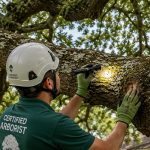
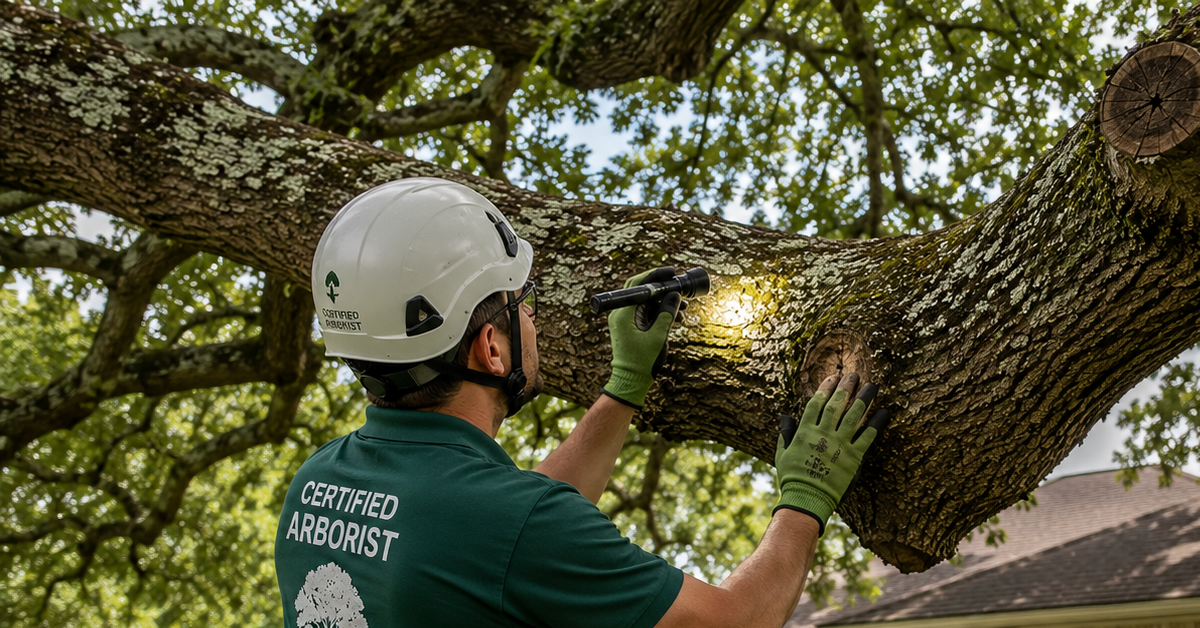
- Use a Licensed Arborist for Evaluation: A trained eye can identify internal decay, root issues, or structural weakness that isn’t obvious from the ground.
- Keep Documentation: A written hazard assessment protects homeowners if questions arise later about whether reasonable action was taken.
- Plan for Storm Prep Broadly: Beyond hazardous tree removal, proactive pruning and storm prep support reduce risk across an entire property, not just for one tree.
If you’ve identified a hazardous tree, the safest approach is to have it evaluated and addressed before storm season begins, not after. At A Perfect Cut Tree Service, our experienced, certified arborists focus on preserving healthy trees whenever possible while helping homeowners reduce the risks posed by structurally compromised or declining trees.
Rather than recommending removal as the default solution, A Perfect Cut Tree Service provides professional hazard assessments based on current arboricultural standards and sound science. If a tree can be safely preserved through proper pruning or maintenance, our arborists recommend the most effective course of action. Our proactive, noninvasive approach to tree care is supported by ongoing industry education and the latest tree health techniques. To know more about how our team can assist you in removing a hazardous tree until after storm season, call us at – (504) 732-0779 to Book Your Free Estimate.
Frequently Asked Questions by Homeowners in Metairie, LA
How do I know if a tree is truly hazardous or just needs pruning in Metairie, LA?
A licensed arborist can determine whether a tree’s issues are structural (requiring removal) or manageable through pruning and monitoring. This is not something that should be judged by appearance alone.
Is it too late to remove a hazardous tree once storm season has started?
No, removal can and should still happen as soon as possible. Waiting until after storm season entirely leaves the hazard in place through the highest-risk months of the year.
Will removing a hazardous tree before a storm cost more than waiting?
Generally, no. Scheduled removal is typically less expensive and safer than emergency removal after storm damage occurs.
Does A Perfect Cut Tree Service offer emergency removal if a tree falls during a storm?
Yes, A Perfect Cut offers 24/7 emergency tree removal and cleanup, but proactive removal of a known hazard is always the safer and more cost-effective path.
What areas does A Perfect Cut Tree Service cover for hazard assessments?
A Perfect Cut serves Metairie, New Orleans, Uptown, Kenner, Old Metairie, Harahan, River Ridge, Jefferson, Lakeview, and surrounding communities throughout the Greater New Orleans area.
Risk Assessment Checklist: Preparing for Storm Season
| Situation | Risk of Delay | Recommended Action |
|---|---|---|
| Leaning tree near home | High. May worsen with saturated soil. | Schedule a professional assessment now. |
| Dead limbs over driveway | Moderate to high risk of falling branches. | Prune or remove before storm season. |
| Trunk cracks or splits | High. Structural failure risk. | Request an immediate arborist evaluation. |
| Fungal growth at base | High. Indicates possible root or trunk decay. | Arrange a professional hazard assessment. |
| Tree overhanging power lines | Severe. Safety hazard and potential power outage. | Prioritize professional pruning or removal. |
| Tree already flagged by a prior inspection | Severe. Known structural risk. | Complete recommended work before storm season begins. |
Final Advice
A hazardous tree does not become safer by waiting. Every month of delay during Louisiana’s hurricane season increases the risk to your home, your family, and your neighbors. The safest and most cost-effective time to address a hazardous tree is before storm season, not after. If a certified arborist has already identified a tree as a hazard, it’s important to act promptly rather than waiting for severe weather to prove the risk.
Scheduling a tree assessment with a professional tree service firm in Metairie, LA gives you enough time to plan any necessary pruning or removal before hurricane season begins in June. Be sure to work with a licensed, insured tree care company that employs certified arborists and follows industry best practices. It’s also wise to keep documentation of the hazard assessment in case insurance or liability questions arise in the future. Finally, think beyond a single tree by having your entire property evaluated for storm readiness, as proactive maintenance can help reduce the likelihood of damage during high winds. If you have a tree you’re concerned about, don’t wait for storm season to reveal how serious the risk may be. Call (504) 732-0779 today to schedule a free hazardous tree assessment and quote.