May 10, 2026
Key Takeaways
- Formosan Threat: Unlike native termites, Formosan subterranean termites actively attack and live inside healthy, living trees.
- Structural Failure: Termites hollow out the heartwood, leaving the tree standing but structurally incapable of withstanding storm winds.
- Early Warning Signs: Look for mud tubes on bark, swarming insects in late spring, and hollow sounds when the trunk is tapped.
- Moisture is the Magnet: Leaky irrigation and poor drainage create a damp environment that attracts these pests to your root zone.
- Professional Synergy: Managing termites in trees requires a combination of pest control and expert arborist assessments.
In New Orleans, we live in a city defined by its greenery. From the historic live oaks of St. Charles Avenue to the lush magnolias in our private backyards, trees are the heartbeat of the New Orleans (NOLA) landscape. However, our subtropical climate also invites one of the most destructive forces in nature: the Formosan subterranean termite. While many homeowners focus on protecting their foundations and walls from these wood-eating invaders, few realize that the battle often starts in the canopy.
Formosan termites are an invasive species that have made themselves quite at home in South Louisiana. Unlike our native subterranean termites, which typically prefer dead wood or fallen logs, Formosan termites are perfectly happy to set up shop inside a living, breathing tree. They don’t just use the tree as a bridge to your house; they use it as a food source and a fortress. This creates a silent crisis for property owners. A tree can look vibrant and green on the outside while its internal structural skeleton is being systematically devoured.
Understanding the relationship between termites and trees is essential for any property owner in Metairie, Kenner, or the Greater New Orleans area. In this guide, we will explore how these pests operate, why our local trees are so vulnerable, and what you can do to save your landscape from becoming a termite nesting ground.
The Formosan Difference: Why NOLA Trees are Targets
New Orleans is often cited as the Formosan Termite Capital of the United States. Introduced to the area via military cargo ships following World War II, these pests have thrived in our high humidity and sandy soils. What makes them so much more dangerous than native species is their colony size and their aggressive foraging habits. A single Formosan colony can contain millions of individuals and forage over an area larger than a football field.
While native termites usually nest in the ground, Formosan termites can establish aerial colonies. If there is a consistent moisture source high up in a tree, perhaps a hollow where water collects or a leaky gutter nearby, the termites don’t even need to return to the soil. They can live entirely within the tree, making traditional soil treatments less effective.
Furthermore, Formosan termites are known to attack living tissue. They are particularly fond of our local hardwoods, including live oaks, pecans, and maples. By hollowing out the heartwood, they compromise the tree’s ability to support its own weight. In a city where hurricane season is a yearly reality, a termite-infested tree is a ticking time bomb.
Identifying the Silent Invasion
Because termites work from the inside out, the damage is often invisible until it is catastrophic. However, there are subtle clues that these pests have moved into your landscape.
Mud Tubes on the Bark
Subterranean termites require moisture and protection from predators like ants and birds. To move along the exterior of a tree, they build mud tubes, thin, pencil-sized tunnels made of soil, saliva, and fecal matter. If you see these brownish, earthy lines running up the crevices of your tree bark, you have an active infestation.
Swarmers (Alates)
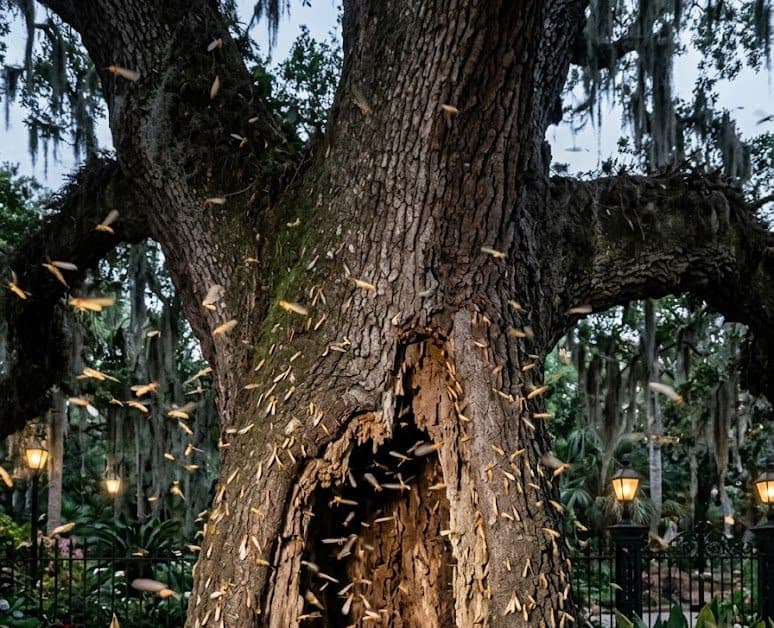
In late May and early June, New Orleans residents are well aware of termite season. On humid evenings, thousands of winged termites, or alates, take flight to start new colonies. If you see a massive swarm emerging directly from the base or a hollow of a tree on your property, it is a clear sign that a mature colony is already established inside that wood.
Carton Material in Hollows
If a branch falls or a cavity is exposed, look for carton. This is a sponge-like material that termites create to fill voids and maintain moisture levels. It looks like a cross between dried mud and cardboard. If you see this inside your tree, the structural integrity of that limb or trunk is likely gone.
The Hollow Sound
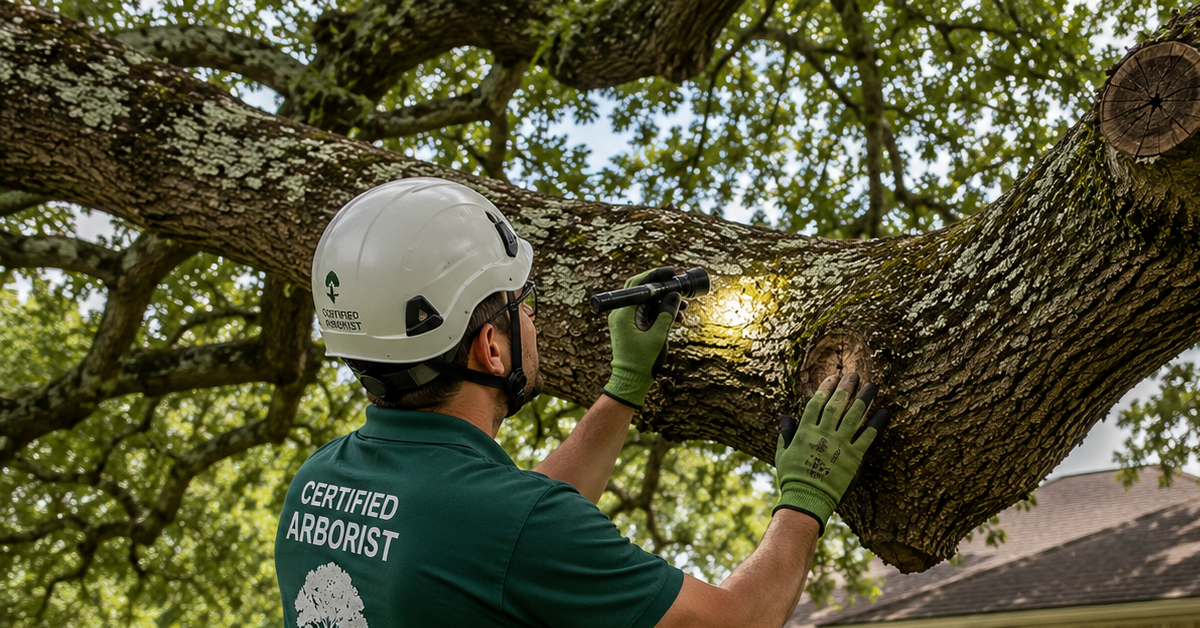
Arborists often use a sounding mallet to test trees. A healthy tree has a solid, resonant ring when struck. A tree that has been hollowed out by termites will sound dull or like a hollow drum. This is a primary indicator that the heartwood, the part of the tree that provides its strength, has been consumed.
Environmental Factors that Attract Termites
Termites are essentially moisture-seeking missiles. If your landscape provides easy access to water, they will find it.
Poor Drainage: If water pools at the base of your trees after a New Orleans rainstorm, you are creating an ideal entry point. Formosan termites enter through the root flare, where the wood is most likely to be damp and softened.
Mulch Issues: While mulch is great for trees, piling it too high against the trunk (the mulch volcano) creates a dark, moist highway for termites to crawl from the soil directly into the bark without being seen.
Lawn Mower Wounds: Every time a lawn mower or weed eater nicks the base of a tree, it creates an open wound. These wounds leak sap and moisture, which act as a beacon for foraging termites.
The Danger of the Green Shell
The most deceptive aspect of termite damage in trees is that the tree often appears healthy. Termites primarily eat the heartwood, which is the dead, structural center of the tree. The outer layers, the sapwood and cambium, are responsible for moving water and nutrients to the leaves.
Because the plumbing of the tree remains intact, the canopy stays green and lush. Homeowners are often shocked when a seemingly beautiful tree snaps in half during a minor thunderstorm. Without the heartwood, the tree is essentially a tall, heavy pipe. It has no flexibility and no strength to resist the high winds common in South Louisiana. This is why professional hazardous tree assessments are non-negotiable for properties with mature trees in New Orleans.
Protecting your most valuable landscape assets requires a team that understands both the beauty and the biological vulnerabilities of New Orleans trees. At A Perfect Cut Tree Service, we are not just a removal company; we are dedicated to tree preservation and the overall health of your landscape. With 40 years of experience and as a recognized leader in the industry, voted Best Tree Service by New Orleans Homes Magazine in 2018, we bring a licensed arborist to every single job site. Our non-invasive approach to maintenance is rooted in sound science and the latest techniques for hazardous tree assessment. Whether you are dealing with suspected termite damage, need expert pruning, or require emergency storm support, we provide the professional, insured, and expert care your property deserves.
Give our Metairie office a call today at (504) 800-8266 for a free estimate and let our four decades of expertise protect your home.
Frequently Asked Questions
1. Can termites jump from my tree to my house?
Termites don’t jump, but they do forage. If a colony is in a tree within 100 feet of your home, they are highly likely to find your foundation. Treating the tree is a vital step in protecting your house.
2. Can a tree survive a termite infestation?
If the infestation is caught early, the termites can be treated, and the tree may survive. However, the wood they have already eaten will never grow back. The tree must be assessed to see if enough sound wood remains to keep it safe.
3. Does every tree in New Orleans have termites?
While not every tree is infested, the Formosan population in NOLA is so high that most mature trees will eventually be tested by foragers. Constant monitoring is the only way to stay ahead of them.
4. Should I just cut down a tree if I see termites?
Not necessarily. A licensed arborist can determine the extent of the damage. If the damage is localized to a single limb, that limb can be removed. If the trunk is hollowed, removal might be the only safe option.
5. Does termite bait work for trees?
Yes, baiting systems can be very effective in reducing the overall colony population in your yard, which in turn reduces the pressure on your trees.
6. Do termites eat dead trees more than living ones?
While they love dead wood, Formosan termites are unique in their ability to thrive in living trees. Never assume a tree is safe just because it is growing.
7. Can I treat the tree myself with over-the-counter sprays?
Surface sprays usually do nothing to stop a colony living deep inside the trunk. Professional soil injections or specialized foam treatments are usually required.
8. Are certain tree species immune to termites?
No tree is completely immune, but some, like Cypress, have natural resins that make them less attractive. However, even Cypress can be attacked if the colony is large enough and hungry enough.
Summary Checklist: Termites in Trees
| Condition | Risk Level | Recommended Action |
|---|---|---|
| Visible mud tubes on bark | High | Arrange prompt inspection to assess pest activity and structural impact, then implement appropriate treatment |
| Swarmers emerging from the trunk | Critical | Request urgent structural evaluation and pest management due to possible severe internal damage |
| Hollow sound when tapped | High | Schedule professional internal wood integrity testing to determine the extent of decay or void formation |
| Sponge-like carton material in hollows | Critical | Treat as a severe structural concern and assess immediately for safety mitigation or removal |
| Thinning canopy with wounds near the base | Moderate | Inspect for root decline, decay, and potential pest entry contributing to canopy stress |
Final Advice
Living in New Orleans means accepting that termites are a part of our ecosystem, but it doesn’t mean you have to lose your trees to them. The key to landscape longevity is a proactive approach. Start by eliminating moisture stressors around your root flares, ensuring gutters aren’t dumping water at the base of the trunk, and keep mulch at a safe distance. If you have large, mature trees like live oaks or pecans, do not rely on a green canopy as proof of health. A tree can be 70% hollow and still look vibrant right up until the moment it fails.
Have a licensed arborist conduct a sounding test or a Resistograph reading at least once every two years, especially if you have seen swarmers in your neighborhood. If termites are found, coordinate between your pest control provider and your tree service to ensure the colony is killed before the tree is pruned or removed; otherwise, you may simply drive the survivors toward your home.