May 8, 2026
Key Takeaways
- Fungal Presence is a Warning: Visual mushrooms or conks are often the final stage of a long-term internal rot.
- Ganoderma (Artist’s Conk): These shelf-like structures indicate serious heartwood decay and potential structural failure.
- Armillaria (Honey Fungus): This fungus attacks the root system, often killing the tree by strangling the cambium layer.
- Inonotus (Oak Bracket): Common on mature oaks, this fungus causes brittle root rot that can cause sudden toppling.
- Professional Assessment is Crucial: Only a licensed arborist can determine if a fungal infection requires tree removal or if preservation is possible.
Trees are the silent sentinels of our landscapes. They provide shade, increase property value, and add a sense of history to our homes, especially in the lush environments of Greater New Orleans and Metairie, Louisiana.
However, trees are also living organisms subject to disease, decay, and death. One of the most common and often misunderstood threats to tree health is wood-rotting fungi.
By the time you see a mushroom sprouting from the side of a trunk or at the base of a tree, the infection is usually well advanced. These reproductive structures, known as fruiting bodies, are the tip of the iceberg. Beneath the bark, a network of fungal threads called mycelium is actively consuming the cellulose and lignin that give the tree its strength. If left unchecked, this rot can turn a majestic oak or sturdy maple into a significant safety hazard.
Understanding which fungi to look for can be the difference between a simple pruning job and a catastrophic property loss during a Louisiana storm. Here are the three most common and dangerous fungi you need to know.
The Biological Reality of Wood Decay
To understand why fungi are so dangerous, we have to look at how a tree is built. Think of a tree trunk as a bundle of straw. The outer layers transport water and nutrients, while the inner heartwood provides the structural skeleton that keeps the tree upright. Wood-rotting fungi produce enzymes that dissolve these structural components.
In the humid, warm climate of Louisiana, fungi thrive. Our high moisture levels and long growing seasons create the perfect incubator for spores. When a tree is stressed by drought, flooding, or physical injury, its natural chemical defenses weaken, allowing these microscopic invaders to take hold. Once they are inside, they begin a slow but relentless process of digestion.
1. Ganoderma: The Shelf of Destruction
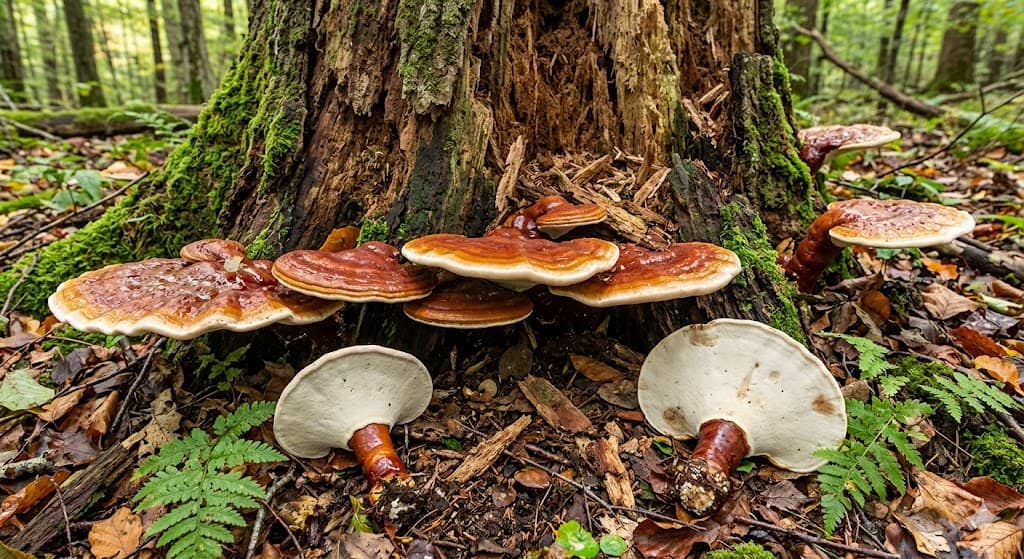
Ganoderma is a genus of wood-decaying fungi that is easily recognized by its tough, woody, shelf-like appearance. In the industry, these are often referred to as conks. They typically grow near the soil line or on the lower trunk of the tree.
How to Identify It
Ganoderma conks are usually semi-circular or fan-shaped. They often have a shiny, reddish-brown top that looks like it has been varnished, which is why some species are called Artist’s Conk or Reishi. The underside is typically white or cream colored and is covered in tiny pores rather than gills. If you were to scratch the white underside with a fingernail, it would leave a dark brown mark, hence the name Artists Conk.
The Danger Level
Ganoderma causes white rot. This means the fungus breaks down both the lignin, which provides stiffness, and the cellulose, which provides flexibility of the wood. When Ganoderma appears at the base of a tree, it indicates that the structural roots and the heartwood of the lower trunk are being hollowed out. A tree with Ganoderma may look perfectly green and healthy in the canopy, but its foundation is crumbling. This makes the tree highly susceptible to snapping or uprooting during high winds.
2. Armillaria: The Silent Root Killer
Armillaria, commonly known as Honey Fungus due to the golden yellow color of its mushrooms, is one of the most aggressive fungi in the world. Unlike many other fungi that only feed on dead wood, Armillaria can attack and kill living trees.
How to Identify It
Look for clusters of honey colored mushrooms appearing at the base of the tree in late summer or autumn. However, the mushrooms are fleeting and may only last a few days. A more reliable sign is the presence of rhizomorphs, black, stringy structures that look like shoestrings growing under the bark or in the soil around the roots. You might also notice white, fan-shaped fungal mats if you peel back a small section of dead bark near the root flare. These mats often have a distinct mushroomy smell.
The Danger Level
Armillaria causes root rot and collar rot. It effectively girdles the tree, cutting off the flow of water and nutrients between the roots and the leaves. Symptoms often include a thinning canopy, yellowing leaves, and a general decline in vigor. Because it destroys the anchoring roots, an Armillaria-infected tree can fall over without warning, even on a calm day. Furthermore, Armillaria spreads through the soil to neighboring trees, making it a landscape plague if not addressed.
3. Inonotus: The Oak Specialist
In the New Orleans area, our live oaks are our pride and joy. Unfortunately, they are the primary targets for Inonotus dryadeus, also known as the Oak Bracket or Warted Oak Polypore.
How to Identify It
This fungus appears as a large, thick, lumpy mass at the base of the tree or on the surface of the roots. When it is young and actively growing, it is yellowish-brown and often weeps or bleeds amber-colored liquid from its surface. As it ages, it turns dark brown or black and becomes very brittle, eventually looking like a piece of burnt toast. It often has a velvety texture when fresh.
The Danger Level
Inonotus targets the large structural buttress roots. It causes a white rot that makes the wood extremely brittle. The terrifying aspect of Inonotus is that the tree canopy may look lush and vibrant even while the roots are nearly completely decayed. Because the damage is underground, homeowners often don’t realize there is a problem until the tree tips over in a thunderstorm. In many cases, the tree falls with a clean break at the root flare because the roots have been turned into a soft, spongy material.
Environmental Stressors and Fungal Entry
Fungi don’t just appear out of nowhere; they are opportunists. In the Greater New Orleans area, our trees face a constant barrage of environmental stressors that lower their immune systems.
Soil Saturation and Flooding
Louisiana’s low-lying geography means our trees often sit in saturated soil for extended periods. When roots are submerged, they cannot breathe. This lack of oxygen leads to root dieback, creating dead tissue that serves as an entry point for fungi like Armillaria.
Construction Damage
Many homeowners in Metairie and Kenner, LA, undertake renovations or landscaping projects that inadvertently harm their trees. Compaction of the soil by heavy machinery suffocates roots, while trenching for utility lines can sever major structural roots. These wounds are like open sores that fungal spores easily colonize.
Improper Pruning
Pruning is essential for tree health, but topping a tree or making large, jagged cuts prevents the tree from properly sealing the wound. Unlike human skin, trees don’t heal; they compartmentalize. If a cut is too large or done improperly, the tree cannot grow a callus fast enough to block out decay fungi.
How an Arborist Detects Hidden Rot
Since fungal fruiting bodies aren’t always visible, professional arborists use several methods to check for internal decay:
- Visual Assessment: Looking for signs like cankers, weeping sap, or epicormic sprouting, which indicate the tree is under extreme stress.
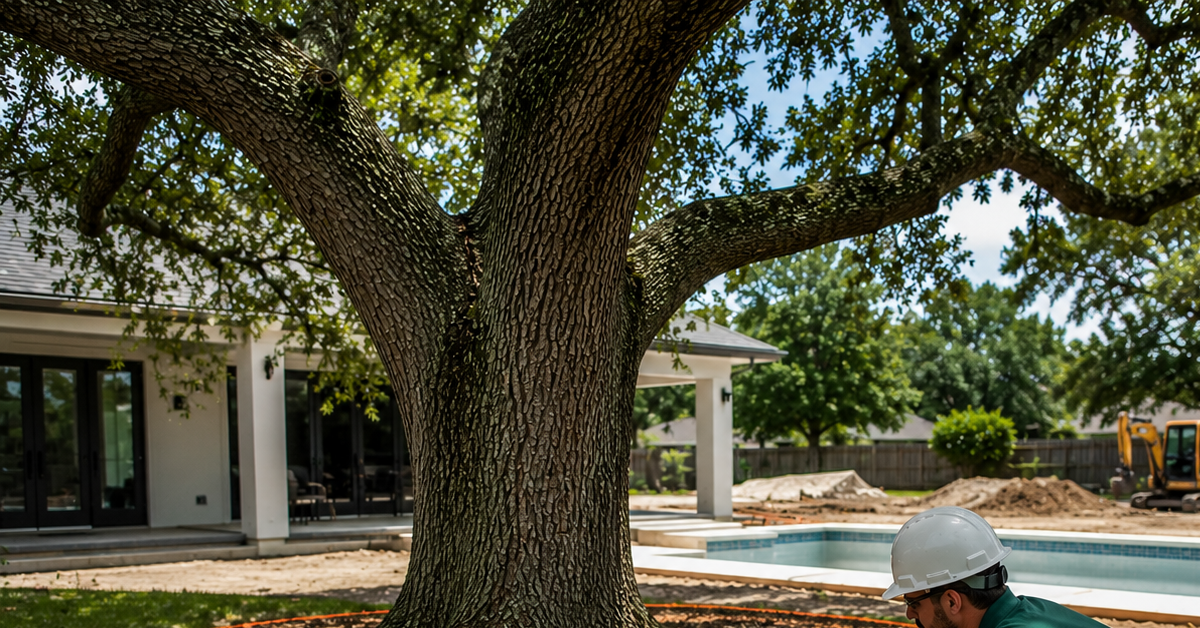
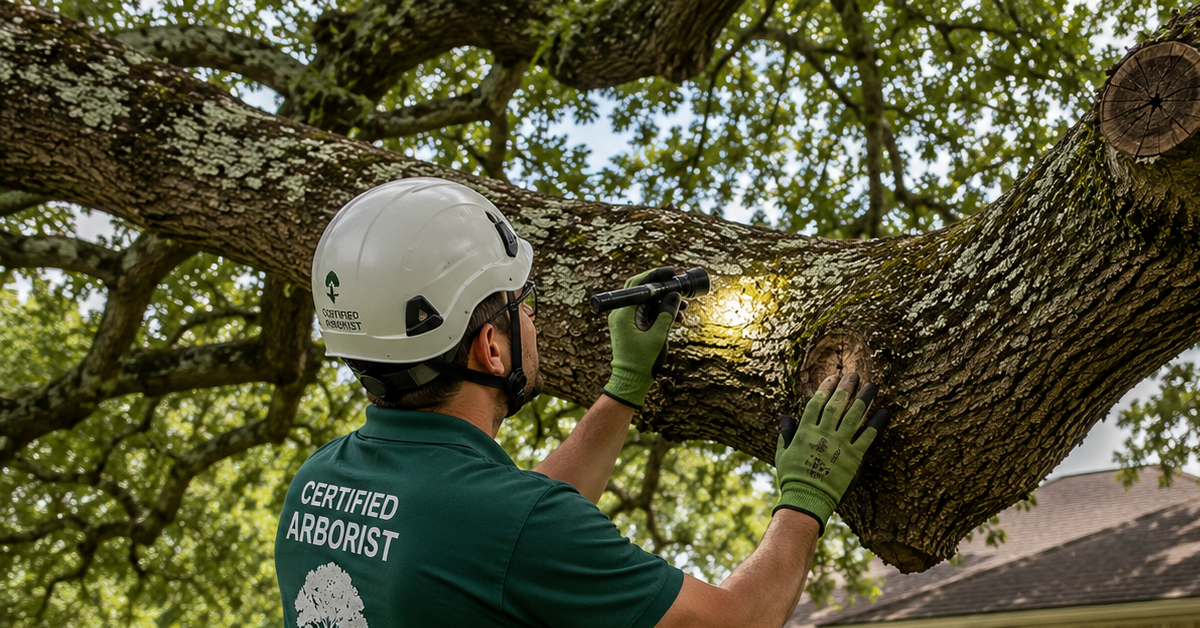
- Sounding: An arborist will tap the trunk with a specialized rubber mallet. A healthy tree produces a sharp, bright thwack, while a hollow or decayed tree produces a dull, hollow thud.
- Resistograph Testing: This high-tech tool uses a tiny drill bit to measure the resistance of the wood. If the resistance drops suddenly, it indicates a hollow pocket or soft, decayed wood inside.
- Root Crown Inspection: Sometimes, soil must be carefully excavated from the base of the tree using an air spade to inspect the health of the primary buttress roots.
Why You Can’t Ignore Fungal Growth
Fungi are nature’s recyclers. Their job is to turn wood back into soil. While this is great for a forest ecosystem, it is a liability for a residential yard. A rotting tree is an unpredictable tree. As the internal wood decays, the tree loses its ability to withstand the stresses of gravity and wind.
In Louisiana, we face unique challenges. Our soil is often saturated, and our storm seasons are intense. A tree with compromised structural integrity is a hazard tree. If a mushroom is growing on your tree, the fungus has already invaded the internal tissue. There is no cure for wood rot; once the wood is decayed, it cannot be made solid again. The goal of an arborist is to assess how much sound wood remains and whether the tree poses an immediate risk to your home, power lines, or family.
When you spot fungi or signs of decay, you need an expert who knows the local Louisiana conditions inside and out. At A Perfect Cut Tree Service, our team features ISA-Certified Arborists who specialize in hazardous tree assessments and noninvasive preservation techniques. Whether you need deep root/tree fertilization to boost a tree’s immunity or safe, professional tree removal for a rotting hazard, we have the specialized equipment and 40 years of experience to get the job done right.
A Perfect Cut Tree Service serves the Greater New Orleans area, including Metairie and Kenner, with 24/7 emergency support to keep your family safe before and after the storm. Every job is overseen by a licensed arborist to ensure the highest standards of safety and professionalism. Give us a call today at (504) 800-8266 for a free estimate and let us help you protect your landscape.
Frequently Asked Questions by Homeowners in Louisiana
Can I just spray the mushrooms with a fungicide to save the tree in Louisiana?
Unfortunately, no. Fungicides usually only treat surface issues like leaf spots or powdery mildew. Once the fungus is inside the wood, sprays cannot reach it or reverse the decay that has already occurred.
If a tree has mushrooms, does it have to be removed immediately in Louisiana?
Not necessarily. A licensed arborist will perform a sounding test or use specialized tools to determine the extent of the rot. If the decay is minimal and the tree is in a low-traffic area, it might be managed through pruning or monitoring.
Are these fungi dangerous to humans or pets?
While most wood-rotting fungi aren’t poisonous to touch, many are toxic if eaten by dogs or children. More importantly, the danger to humans comes from the risk of the tree falling.
Why did fungi start growing on my tree in the first place?
Fungi usually enter through a wound. This could be caused by improper pruning, lawnmower strikes, construction damage to roots, or storm-broken limbs. Stress factors like drought also weaken the tree’s natural defense.
Is there a way to prevent rot?
The best prevention is maintaining tree health. Proper mulching, avoiding root damage from mowers, and having a professional arborist perform regular pruning will keep the tree’s natural defenses strong.
Does a hollow tree always fall?
No. Many trees can live for decades with a hollow center because the outer sapwood is still strong. However, an arborist must calculate the shell thickness to ensure it can still support the weight of the canopy.
How fast does wood rot progress in Louisiana?
It varies by tree species and the type of fungus, but wood rot is generally a slow process, taking years. However, once the fruiting bodies appear, the decay is often in an advanced stage.
Will insurance cover the removal of a rotting tree?
Most insurance companies view tree maintenance as the homeowner’s responsibility. They typically only pay if the tree falls and damages a covered structure. Proactive removal is usually an out-of-pocket expense, but it is much cheaper than a deductible and property repairs.
Summary Checklist: When to Call for Removal
| Condition | Risk Level | Recommended Action |
|---|---|---|
| Ganoderma conks at the base | High to Critical | Arrange for an immediate structural evaluation to assess lower trunk decay and stability risk |
| Honey mushrooms or black rhizomorphs | High | Inspect root system health and evaluate for decay-related structural failure |
| Weeping Inonotus grows on roots | Critical | Request an urgent professional stability assessment of the buttress roots and trunk support structure |
| Sudden lean with the ground heaving | Critical | Keep people clear of the fall zone and arrange emergency hazard response immediately |
| Hollow trunk sound during the sounding test | Moderate to High | Schedule a professional internal decay assessment to determine the remaining structural strength |
Final Advice
If you notice any of the fungal warning signs discussed in this article, you must prioritize a professional inspection immediately. Fungi like Ganoderma or Inonotus are indicators of significant internal structural compromise that can lead to sudden failure during a storm or even on a calm day. To manage these risks, avoid wounding the base of your trees with lawn equipment, as open wounds are the primary entry points for airborne spores. Ensure your soil has proper drainage, as standing water can stress the root system and make it more susceptible to Armillaria. If you are planning any construction or landscaping near mature trees, consult an arborist to prevent root damage that often leads to future rot. Remember that a tree with a vibrant green canopy can still be dangerously hollow or possess a decayed root system. Proactive care, such as professional pruning and deep root fertilization, can strengthen a tree’s natural defenses and potentially extend its life. However, if the decay is advanced, safe removal is the only way to prevent property damage or personal injury. Regular monitoring of the root flare for new fungal growth should be a part of your seasonal property maintenance.