November 23, 2026
Last Updated: November 23, 2026
No, Spanish moss does not kill trees. It hangs on the branches, but it does not feed on them. The real risks are smaller: heavy moss can weigh down a weak limb, and moss often shows up on trees that are already in decline for other reasons.
At A Perfect Cut Tree Service, we work on live oaks across Metairie and the New Orleans area. Below is what Spanish moss does and does not do to a tree, drawn from LSU AgCenter and University of Florida (UF/IFAS) guidance.
If a limb on your tree looks overloaded, contact us and we can take a look.
Spanish Moss Is Not a Parasite
LSU AgCenter puts it plainly: “Spanish moss is not a parasite and does not injure a tree by obtaining any nourishment from it.” It is an epiphyte, a plant that lives on the tree but is independent of it, using the branches only for support and gathering everything else from the air.
According to LSU AgCenter, Spanish moss “gets everything it needs from sunlight, rainwater and air.” It is not a true moss at all. It belongs to the bromeliad family, which makes it a relative of the pineapple.
That sets it apart from mistletoe. LSU AgCenter notes that Spanish moss “doesn’t invade the living tissue unlike mistletoe and other parasitic plants that do.”
Why Moss Shows Up on Dying Trees
Spanish moss often gets blamed for a tree’s decline because it is so visible on bare or dying branches. LSU AgCenter explains that the branch or tree died for other reasons, and the moss is simply growing there. The moss is a bystander, not the cause.
UF/IFAS Extension adds a useful detail: “tree decline can cause Spanish moss growth as the canopy thins and lets in more sunlight for the moss to grow.” A thinning canopy is worth a closer look, but the moss is not the thing to treat.
If you are seeing dead limbs along with the moss, our guide on how to spot diseased trees and take action covers the signs that matter.
When Heavy Moss Becomes a Problem
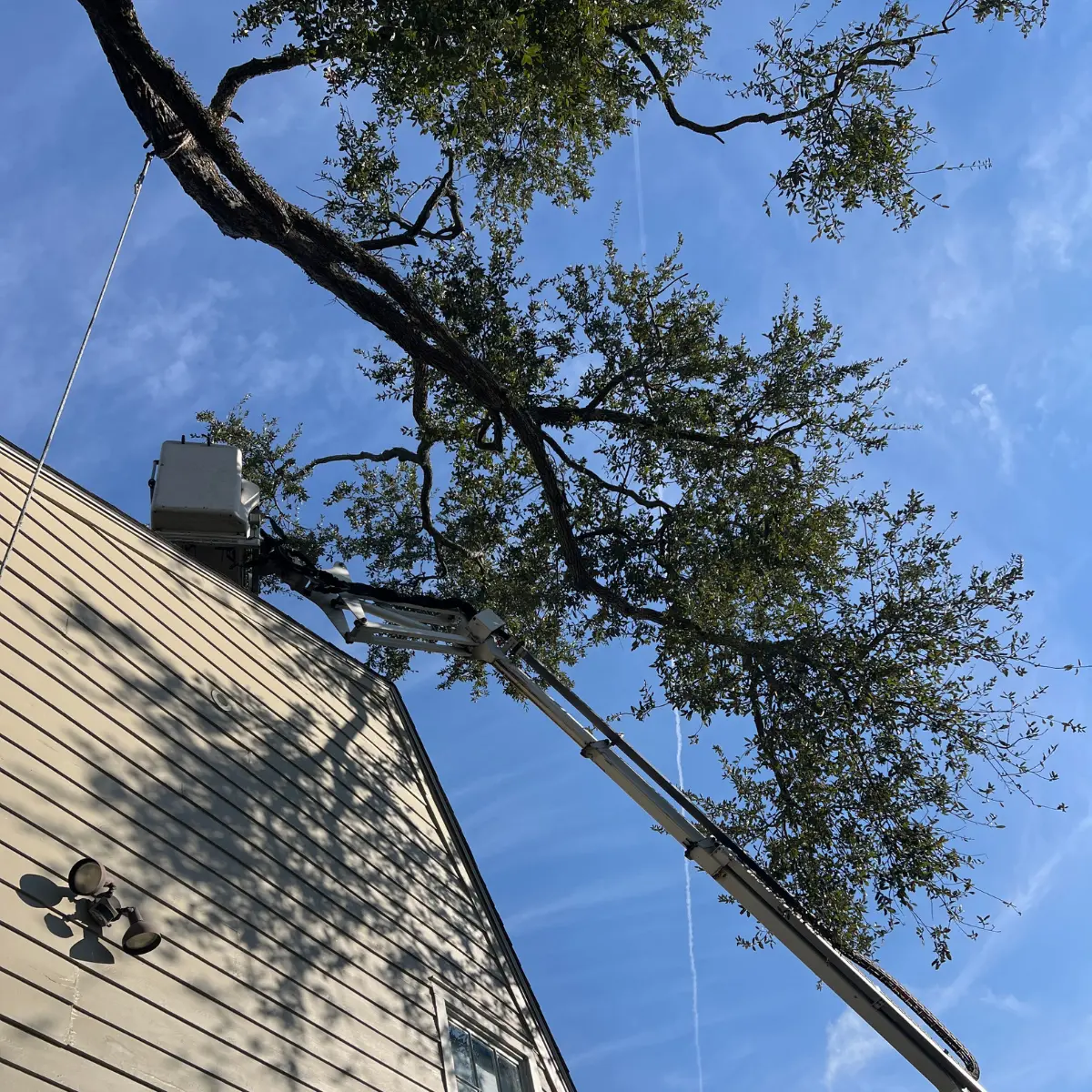 Spanish moss is harmless to a healthy tree, but very heavy growth can still cause trouble in two ways. It adds weight to limbs that may already be weak, and thick moss can shade leaves. UF/IFAS Extension notes that healthy trees still grow faster than the moss.
On weight, LSU AgCenter says that “If a weak limb becomes heavily laden with moss, it could break.” UF/IFAS Extension agrees that the moss “can also weigh down and sometimes break branches.”
That is why a heavily draped limb over a roof, a driveway or a play area deserves a check. Our post on why large limbs fail even when they look healthy explains what else can weaken a limb.
Should You Remove Spanish Moss From Your Oak?
For most shade trees in Metairie, removal is a matter of looks, not tree health. LSU AgCenter says that in shade trees, “the only real reason for removing the moss is if you don’t like the way it looks.” The exception is a weak limb carrying a heavy load, which is worth thinning for safety.
Removal is also not permanent. UF/IFAS Extension notes that Spanish moss “will grow back after a while.”
Live oaks and bald cypresses are especially well suited to Spanish moss, according to LSU AgCenter. Our New Orleans live oak maintenance guide answers whether Spanish moss is killing your oak and covers the rest of your oak’s care.
How Spanish Moss Is Removed Safely
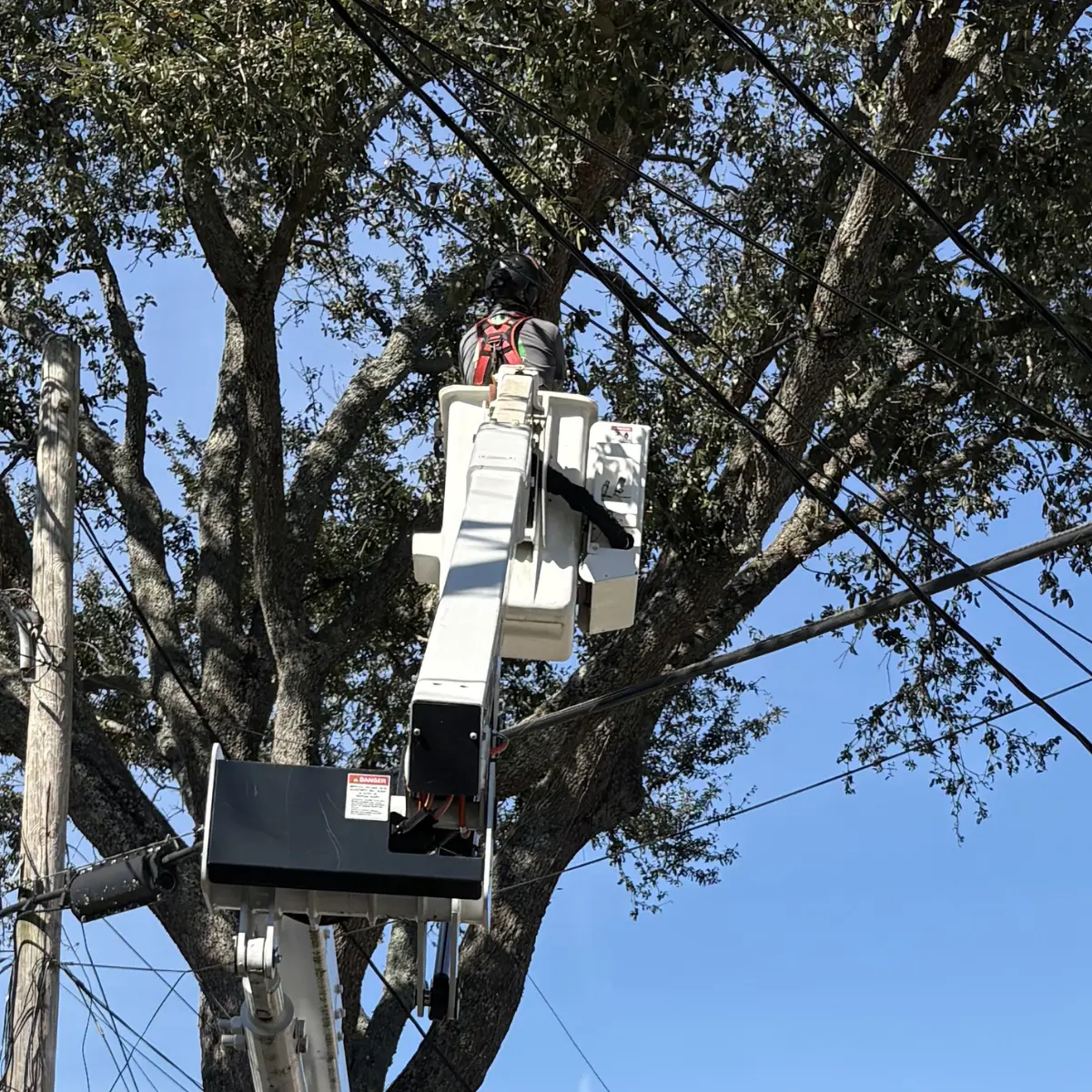 If moss does need to come down, take it off by hand instead of spraying the tree. LSU AgCenter states that “No herbicides are labeled for controlling Spanish moss in trees” and that mechanical removal is the preferred method. For the lower branches, a long pole with a hook works well.
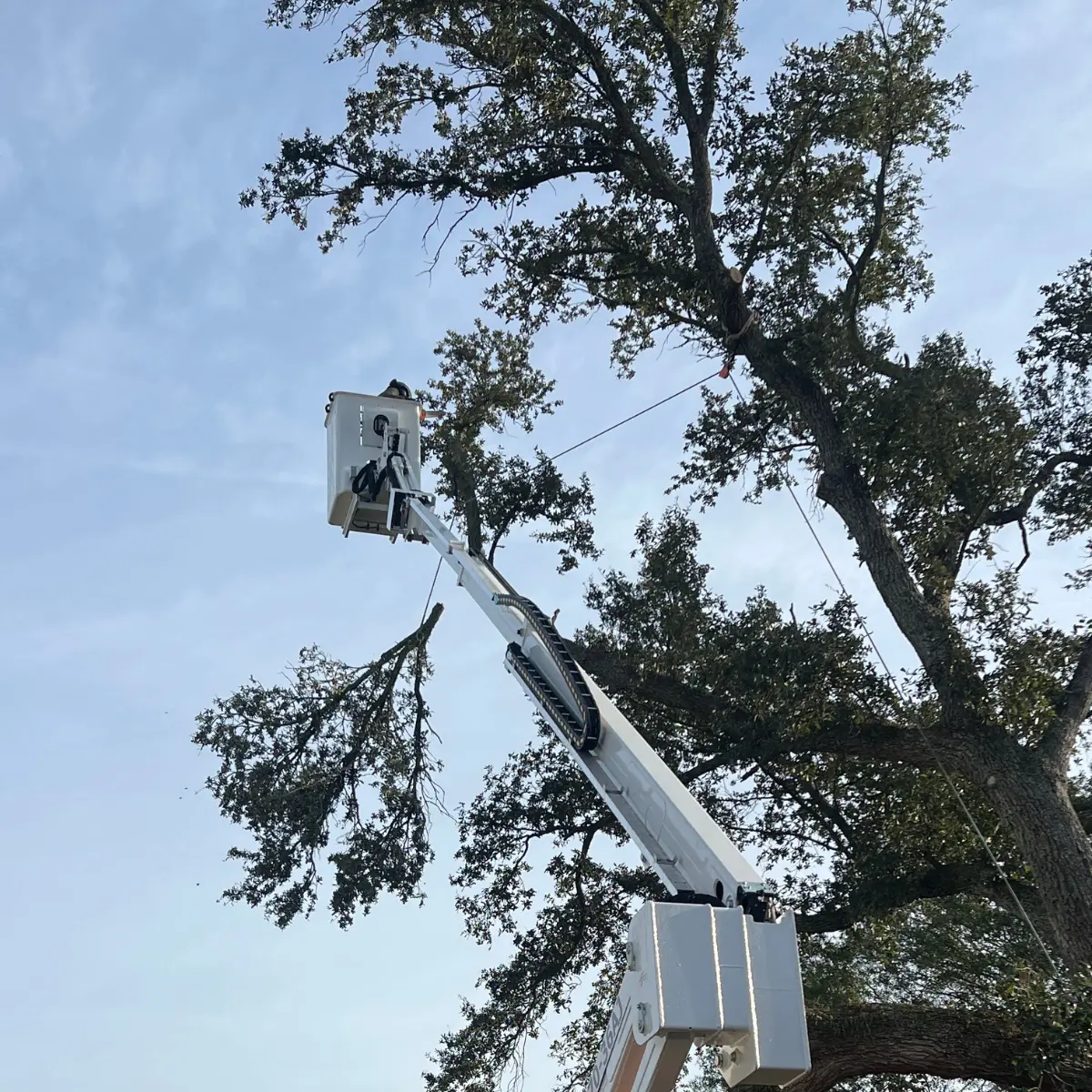
For high branches, LSU AgCenter notes that many tree companies remove moss with a bucket truck. Our crew works from bucket lifts, which reach the high, heavily draped limbs that a pole cannot.
That limb check matters more than the moss. Pulling moss off a weak branch does not fix the branch, so if a limb looks heavy or cracked, ask for it to be checked as part of any tree trimming work.
Be Careful With Moss That Has Fallen
Spanish moss on the tree is safe to be near, but moss lying on the ground is a different story. UF/IFAS Extension warns that “chiggers are commonly found in Spanish moss that is lying on the ground and may cause a rash on the skin if handled.” The same source says moss still on the tree does not contain chiggers.
If you clear fallen moss from your yard, wear gloves and long sleeves.
The moss also has value where it hangs: UF/IFAS Extension notes that songbirds build nests with it, and bats, reptiles and amphibians use the clumps for shelter.
Have an Arborist Check Your Moss-Draped Trees
Spanish moss is part of what makes Metairie’s live oaks look the way they do, and in most cases it can stay. What deserves attention is the limb under the moss, especially if it hangs over your home. Our list of 5 red flags for hazardous trees in New Orleans covers what to watch for.
At A Perfect Cut Tree Service, we have an ISA Certified Arborist on our team, and if you want a weak limb looked at, our hazardous tree assessment is the place to start. We provide tree service in Metairie and the surrounding area.
Call us at (504) 732-0779 to set up a check.
Frequently Asked Questions
Is it good to keep Spanish moss on trees?
In most cases, yes. LSU AgCenter says the only real reason to remove it from a shade tree is appearance, and UF/IFAS Extension notes that birds and other wildlife use it for nesting and shelter.
Will spraying kill Spanish moss?
LSU AgCenter states that no herbicides are labeled for controlling Spanish moss in trees. Mechanical removal, by hand, with a pole or from a bucket truck, is the preferred method.
Why shouldn’t you touch Spanish moss on the ground?
UF/IFAS Extension warns that chiggers are commonly found in Spanish moss lying on the ground and can cause a skin rash. Moss that is still hanging in the tree does not contain chiggers.
Will Spanish moss grow back after it is removed?
Yes. UF/IFAS Extension notes that Spanish moss will grow back after a while, so removal is a cosmetic choice, not a one-time fix.