June 9, 2026
Key Takeaways
- Termites and wood rot often work together, with fungal decay making trees more attractive to subterranean and Formosan termites common in Metairie.
- Signs of infestation include mud tubes, soft or hollow wood, fungal conks, and unexplained canopy thinning.
- Louisiana’s warm, humid climate makes Metairie trees especially vulnerable year-round.
- Early professional assessment can save a tree; delayed action increases the risk of sudden failure.
- Severely compromised trees near structures should be removed promptly by a licensed tree care professional.
- A Perfect Cut Tree Service provides expert hazardous tree assessment, removal, and stump grinding throughout Metairie and the greater New Orleans area.
When homeowners in Metairie, Louisiana notice a tree looking thin, leaning slightly, or showing unusual growth at its base, they often assume drought stress or storm damage. What many do not realize is that the real culprit may already be working silently from within: termites and wood rot. These two threats frequently operate together, accelerating decay deep inside a tree’s structural core long before any visible danger signals appear on the outside. In Louisiana’s warm, humid environment, the window between early infestation and catastrophic tree failure can be surprisingly narrow, making early identification and professional response essential for protecting your property.
Why Metairie Trees Face an Elevated Risk
Metairie is located in a region with some of the highest termite activity in the United States, including both native subterranean termites and the highly destructive Formosan termite. Unlike many species, Formosan termites can infest living, moisture-rich trees, hollowing out trunks and roots while trees continue to appear healthy.
The area’s warm temperatures, high humidity, and frequent rainfall create ideal conditions for both termites and wood-decay fungi. Urban stress factors such as compacted soil, pavement, storm damage, and lawn equipment injuries further weaken trees, making them more vulnerable to infestation and decay.
How Termites and Wood Rot Work Together
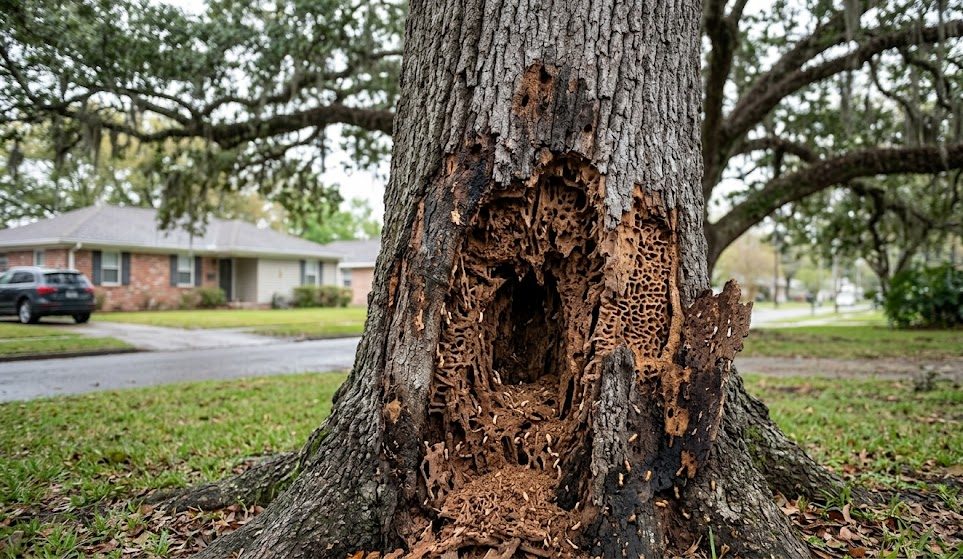
Wood-decay fungi enter trees through wounds, pruning cuts, and root injuries, breaking down the wood’s structural components. Over time, the affected wood becomes soft, moisture-retentive, and significantly weaker. This decayed wood is highly attractive to subterranean and Formosan termites because it is easier to excavate and rich in cellulose. As termites tunnel through rotted areas, they create galleries that further weaken the tree and disrupt water and nutrient transport. Together, termite activity and wood rot can severely compromise structural stability, often with few visible symptoms until significant damage has occurred.
Recognizing the Warning Signs
Catching termite activity and wood rot early requires knowing what to look for, because both problems tend to hide within the tree rather than announce themselves clearly on the surface.
- Termites and wood rot often develop out of sight, making early detection dependent on recognizing subtle warning signs.
- Mud tubes on the trunk, root flare, or exposed roots are a strong indicator of subterranean or Formosan termite activity. These pencil-sized tunnels help termites travel safely between the soil and their feeding areas, requiring prompt professional inspection.
- Fungal conks (shelf or bracket fungi) growing on the trunk or roots signal active internal wood decay and advanced decomposition.
- Multiple conks or fungi near the root flare often indicate significant structural weakening within the tree.
- Hollow-sounding or soft areas on the trunk, peeling bark, moisture stains, or seepage can point to extensive internal decay.
- Canopy thinning, sparse foliage, and premature leaf drop may indicate damage to roots or trunk tissues that disrupt water and nutrient flow.
- Frass (sawdust-like debris), small bark exit holes, and discarded termite wings around the tree base are additional signs that should be investigated quickly.
What Homeowners Can Do Immediately
If you observe any of the warning signs above, the first priority is to stop adding stress to the tree. Avoid wounding the trunk or roots with lawn equipment. Do not pile mulch directly against the bark, as this traps moisture and creates an ideal environment for fungal entry points. Remove any dead wood, debris, or wood piles from the immediate area around the tree, since these serve as secondary food sources and staging areas for termite colonies.
Reduce soil compaction around the root zone where possible and ensure that irrigation does not create persistently saturated soil near the trunk. Excess moisture accelerates wood decay and creates the soft soil conditions that support large underground termite colonies.
However, it is important to be realistic: once termites have established galleries within a tree and wood rot has progressed beyond the surface, there is no effective do-it-yourself solution that reverses the internal damage. Topical insecticide applications do not penetrate deep enough to eliminate established internal colonies. Treating the tree with surface sprays while structural decay advances underneath creates a false sense of security and delays the professional evaluation the tree actually needs.
When Professional Assessment Becomes Urgent
Not every tree with termite activity or early rot requires immediate removal. Hiring an experienced arborist firm in Metairie, Louisiana can assist in evaluating the extent of decay, assess how much structural wood remains sound, and determine whether the tree poses an immediate hazard or can be managed with targeted pruning, monitoring, and protective treatments.
However, certain conditions require urgent professional response. A tree showing active termite infestation combined with hollow trunk sections, visible fungal conks at the root flare, a lean that has progressed or appeared suddenly, or large dead limbs overhead should be treated as an immediate safety risk, especially when located near a home, fence, driveway, or area where people gather. Termite-damaged trees with compromised root systems are particularly prone to sudden, unpredictable failure during high-wind events and in a region like Metairie, where tropical storms and hurricane-force winds are a seasonal reality, the stakes are considerably higher than in other parts of the country.
Trees that have lost more than a third of their internal wood to combined rot and termite damage, or that show instability when assessed at the root zone, are generally beyond preservation. Safe, professional removal at that stage protects your property, reduces termite pressure on adjacent trees and structures, and eliminates a liability before a storm event forces a far more dangerous emergency situation.
Professional Diagnosis and Long-Term Site Planning
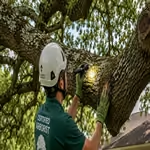
A qualified tree care professional in Metairie, Louisiana brings more than equipment to an assessment; they bring the diagnostic experience to distinguish surface-level cosmetic issues from genuinely structural threats that warrant removal. Professionals use sounding techniques, visual inspection of root flare and crown, and knowledge of local pest pressure to build an accurate picture of the tree’s condition. When removal is warranted, proper stump grinding is essential because stumps left in place continue to harbor both termite colonies and wood-decay fungi, creating ongoing risk for surrounding trees and, in the case of Formosan termites, potentially serving as a launching point for structural infestations of nearby buildings.
A Perfect Cut Tree Service has been serving Metairie, New Orleans, and surrounding Louisiana communities with professional, reliable tree care for years. Our certified arborists provide comprehensive hazardous tree assessments to identify structural threats from termite damage, wood rot, storm injury, and disease before problems escalate.
A Perfect Cut is equipped for safe tree removal, precision trimming, and thorough stump grinding using advanced equipment and professional techniques that protect surrounding landscaping and structures throughout the process. We also offer 24/7 emergency tree removal and cleanup for situations that cannot wait, along with storm prep and support services that are especially critical in Metairie’s hurricane-prone environment.
A Perfect Cut provides transparent, reasonable pricing and free estimates, making it straightforward for homeowners to get expert eyes on a concerning tree without delay. Call A Perfect Cut Tree Service to request your free estimate today.
Frequently Asked Questions About Termites and Tree Rot in Metairie, Louisiana
Can a tree survive a termite infestation in Metairie’s Climate?
It depends on the extent of the infestation and the overall health of the tree. Trees with early or limited termite activity and no significant internal decay may survive with professional intervention, including targeted treatment and stress reduction. However, trees with advanced internal galleries, combined wood rot damage, or compromised root systems are rarely salvageable and are better assessed for safe removal.
How do I know if my tree has internal rot versus just surface damage?
Surface damage from storms or mechanical injury typically remains visible and localized. Internal rot often manifests as hollow-sounding wood when tapped, fungal conks growing from the trunk or roots, bark that seeps moisture or stains, and unexplained canopy thinning. A professional arborist can probe and sound the trunk to map internal decay more accurately than visual inspection alone allows.
Are Formosan termites worse for trees than native termites?
Yes. Formosan subterranean termites build significantly larger colonies than native species and consume wood far more rapidly. They also infest living trees more aggressively, which makes them particularly damaging in Louisiana’s tree canopy. Formosan activity in a tree warrants urgent professional evaluation.
Does removing a termite-damaged tree stop the termites?
Removing the tree reduces one food source and reduces risk to structures, but established subterranean termite colonies live underground and will seek new food sources. Stump grinding after removal is strongly recommended to eliminate the residual wood mass that continues to attract and support colony activity after the main trunk is gone.
How often should trees near my Metairie home be inspected for pests and decay?
At minimum, a professional inspection every one to two years is advisable for mature trees near structures. Trees that have experienced storm damage, recent pruning, or are in areas known for high termite pressure should be inspected more frequently. Annual inspections provide the best chance of catching developing problems before they reach a critical stage.
Summary Checklist: Tree Threat Assessment
| Condition | Risk Level | Recommended Action |
|---|---|---|
| Mud tubes on trunk or roots | Moderate-High | Schedule a professional termite and structural assessment |
| Fungal conks at the base or roots | High | Arborist inspection to evaluate the extent of internal decay |
| Hollow sound when tapping trunk | High | Structural assessment recommended; consider removal near structures |
| Combined rot and termite damage | Severe | Removal is often the safest option |
| Leaning tree with root zone instability | Critical | Urgent professional removal required |
Final Advice
Termites and wood rot rarely announce themselves until the damage inside a Metairie tree has already reached a serious stage. By the time a tree looks visibly unhealthy, hollow, or structurally unstable, the window for preservation has often closed. The most effective strategy is proactive inspection, particularly for mature trees near your home, driveway, or high-use outdoor areas. Recognizing early warning signs, mud tubes, fungal growth, soft bark, and unexplained canopy decline and acting on them quickly gives you the best chance of making an informed decision about whether a tree can be saved or needs to come down safely. In a region where Formosan termites are endemic and hurricane season puts additional stress on structurally weakened trees every year, waiting is rarely the right call. A reliable tree care professional in Metairie, Louisiana can assist in conducting an on-site evaluation to protect your property before a hidden threat becomes an urgent emergency. Call A Perfect Cut Tree Service today to schedule your free estimate.