May 14, 2026
Tree preservation in New Orleans is a structured process that begins with a professional assessment, moves through targeted protection methods like root zone fencing, air spading, cabling, and structural pruning, and ends with long-term monitoring. If you have been told a heritage live oak must be preserved, or you are planning a renovation near a mature tree, the work is less disruptive than most homeowners expect, but it requires planning and the right credentialed professionals on site.
This guide walks you through every stage so you know exactly what will happen on your property and how to make sure the work actually protects the tree.
Key Takeaways
- Tree preservation in New Orleans is most often required for construction near heritage live oaks, hurricane recovery, or city ordinance compliance.
- Every project should start with a documented tree preservation plan from an ISA Certified Arborist.
- The Critical Root Zone (CRZ) extends one foot in radius for every inch of trunk diameter.
- Common methods include root protection fencing, air spading, cabling, structural pruning, and soil decompaction.
- Heavy equipment, material storage, and grade changes inside the root zone are the leading causes of preventable tree loss.
- Trees with severe decay, advanced root loss, or structural failure may need removal instead of preservation.
What Tree Preservation Actually Involves
Tree preservation keeps a mature, valuable tree alive and structurally sound through a period of stress, whether from construction, storm damage, soil compaction, or age. Within the broader practice of arboriculture, it falls under the same umbrella as risk assessment and tree health care.
It is a coordinated plan executed by trained professionals using methods backed by ANSI A300, the American National Standard for tree care operations. Done correctly, the work is largely invisible. The real value happens below ground in the root zone and inside the tree itself.
Why Tree Preservation Matters for New Orleans Properties
Heritage live oaks define the city: The Garden District, Uptown, City Park, and neighborhoods across Orleans, Jefferson, and St. Tammany Parishes are built around oaks that took 80 to 150 years to mature. They cannot be replaced in a single generation.
City ordinances protect public trees: The City of New Orleans Department of Parks and Parkways regulates work on trees in public rights of way and on neutral grounds. Permits are required for trimming or removal, and contractors who damage these trees face penalties.
Hurricane recovery is constant: After every major storm, trees across the region need preservation work to recover from broken limbs, root failure, and salt or floodwater stress. A tree that looks fine post-storm may still need active intervention.
The Initial Assessment and Planning Phase
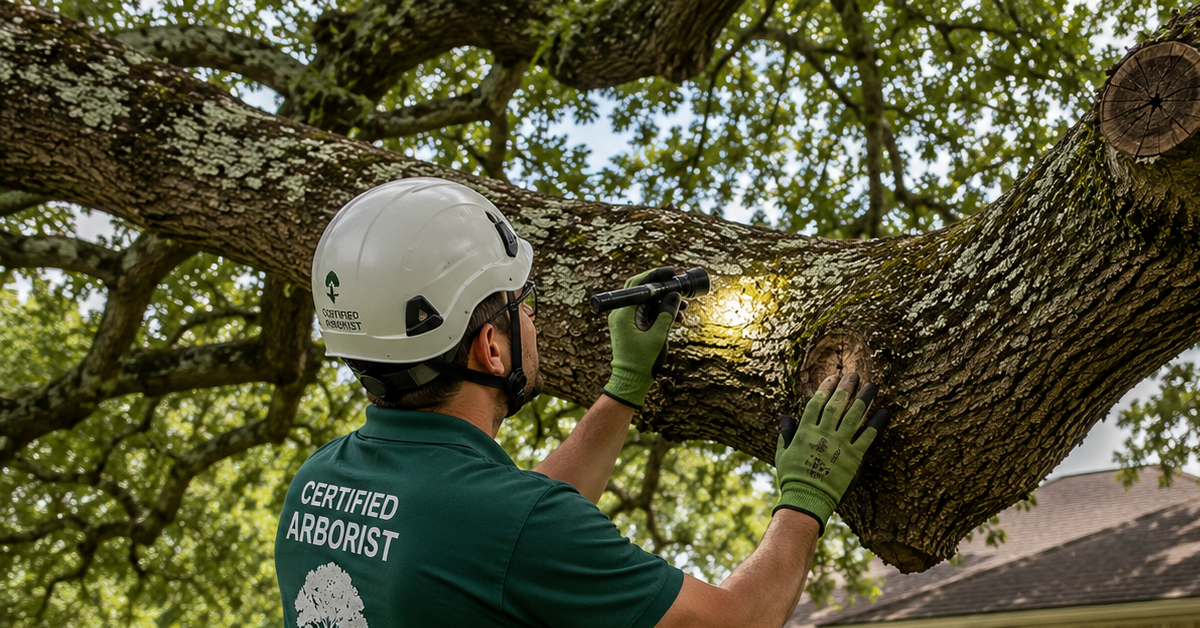
Every legitimate project begins with an on-site evaluation by a certified arborist. The arborist measures the trunk, calculates the Critical Root Zone, evaluates canopy health, checks for structural defects, and produces a documented tree preservation plan.
The assessment also identifies which trees are good candidates and which are not. According to industry best practices, trees that are structurally unstable, in poor health, or unable to survive the effects of construction become a liability to the project.
If you have not yet had an evaluation, schedule a hazardous tree assessment before any preservation planning begins. It is the foundation on which everything else depends.
Common Preservation Techniques Used on Local Properties
| Technique | What It Is | When It Is Used | What You Will See |
| Root Protection Fencing | Six-foot chain link barrier around the Critical Root Zone | On every construction project near a preserved tree | Fence panels staked in a circle around the tree with signs marking the protected area |
| Air Spading and Root Pruning | Compressed air exposes roots without damage, so the arborist can prune cleanly | Before trenching, grading, or any excavation near the root zone | Crew using a long air spade tool, followed by clean cuts on smaller roots |
| Structural Pruning | Selective removal of dead or poorly attached branches to reduce wind resistance | Before hurricane season and during preservation work | Climber or bucket truck operator working through the canopy with hand saws |
| Cabling and Bracing | Steel cables or threaded rods to stabilize weak branch unions | On mature trees with V-shaped unions, splits, or weak attachments | Hardware installed high in the canopy, mostly invisible from the ground |
| Soil Decompaction and Mulching | Loosening compacted soil and adding mulch over the root zone | On trees stressed by foot traffic, parking, or post-construction compaction | Crews working a wide area around the tree, finishing with a three to four-inch mulch ring |
According to guidance from the International Society of Arboriculture, root pruning is best left to an ISA Certified Arborist who can take into account the variables necessary to reduce stress to the tree.
Schedule a pre-construction tree assessment with A Perfect Cut before work begins. It is the most effective way to prevent irreversible root damage.
Protecting Trees During Construction Projects
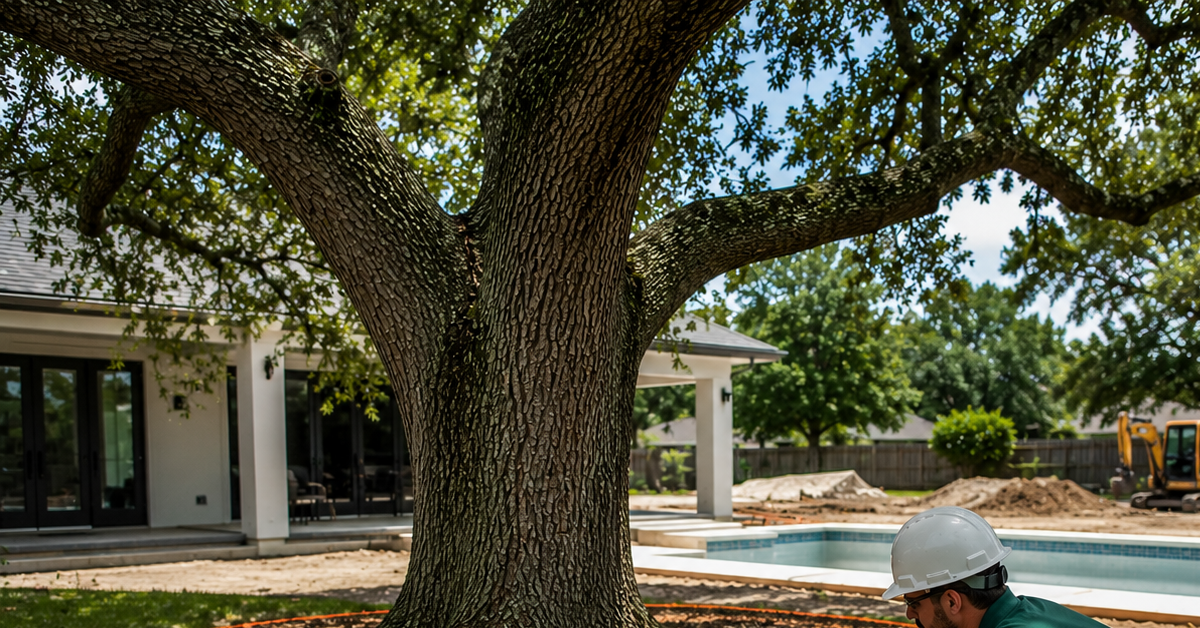
Construction is the single biggest threat to mature trees in urban New Orleans. Trenching for utilities, grading for foundations, and parking heavy equipment near a trunk all damage the root system in ways that may not show up for two or three years.
The standard protective measure is the Tree Protection Zone, defined as a one-foot radius for every inch of trunk diameter. A 24-inch diameter tree needs a 24-foot radius zone. Inside that zone, no equipment, material storage, or grade changes are permitted without arborist supervision.
If utility lines must cross the root zone, boring or tunneling under the roots is the standard alternative to trenching. If your project is affected by storm damage, emergency tree service can stabilize the tree before deeper preservation work begins.
When Tree Preservation Is Not the Right Call
Some trees cannot be saved, and trying to preserve them creates liability. Preservation is not the right call when:
- More than 30 to 40 percent of structural roots have been severed
- Advanced internal decay has been confirmed by sonic tomography
- The tree has a significant lean from recent root failure
- Major scaffold limbs are dead with no recovery in sight
- The trunk shows large cavities, open seams, or heavy fungal growth
Construction-related projects also move on a tighter schedule than storm recovery work, which is more urgent and reactive. A qualified arborist will tell you honestly when removal is the safer choice.
Aftercare and Long-Term Monitoring
The day the crew leaves is not the end. Trees respond slowly, and it can take one to three growing seasons to know if preservation has succeeded. Follow-up visits should include canopy inspection, soil moisture checks, hardware evaluation for cabling, and refreshed mulch.
In Greater New Orleans, supplemental watering during the first two years after preservation work is one of the most important things a homeowner can do.
Frequently Asked Questions
How long does tree preservation work take to complete?
Most residential projects involve one to three site visits over a few weeks. Long-term monitoring may continue for one to three growing seasons.
Can a damaged live oak be saved?
Often, yes. Live oaks are remarkably resilient and can recover from significant storm damage and moderate root disturbance if the work is done quickly by a qualified arborist.
Do I need a permit to work on a heritage tree in New Orleans?
You need a permit to remove or significantly trim any tree in the public right-of-way or on a neutral ground. Always check with the Department of Parks and Parkways before starting work near a mature tree.
Is tree preservation required by law in New Orleans?
For trees on public property, yes. Damaging a city-owned tree without authorization can result in fines and replacement requirements. Private property rules may change as the city updates its ordinance.
What is the Critical Root Zone?
The area around a tree where the most important structural and feeder roots live, calculated as one foot of radius per inch of trunk diameter.
How do you protect a tree during home construction?
Install protective fencing around the Critical Root Zone before any work begins, prohibit equipment inside the zone, use boring instead of trenching, and keep a certified arborist involved throughout the project.
Is cabling and bracing a permanent fix?
Cabling and bracing are long-term but not permanent. Hardware should be inspected every few years and may need replacement after 10 to 15 years.
When is it too late to save a tree?
When more than a third of the root system is gone, when major structural roots have been cut, or when the tree shows advanced decay or a recent lean from root failure.
Final Thoughts
Tree preservation in New Orleans is one of the most worthwhile investments a property owner can make. The live oaks, magnolias, and cypresses that define this city took generations to grow, and protecting them through construction and storms is how that legacy continues.
The work itself is methodical, professional, and far less disruptive than most people expect. What matters most is starting early and hiring the right people.
Contact A Perfect Cut to schedule a tree preservation assessment before construction or storm season begins.