May 3, 2026
Key Takeaways:
- Live Oaks are protected by strict local ordinances in New Orleans and require specific permits for major work.
- The critical root zone extends far beyond the drip line and must be protected from soil compaction and construction.
- Spanish moss and Resurrection fern are generally harmless epiphytes that do not require aggressive removal.
- Proper pruning focuses on structural stability and airflow rather than topping or drastic height reduction.
- Deep root fertilization and professional hazardous tree assessments are essential for long-term health in urban environments.
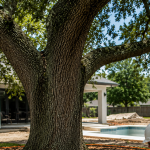
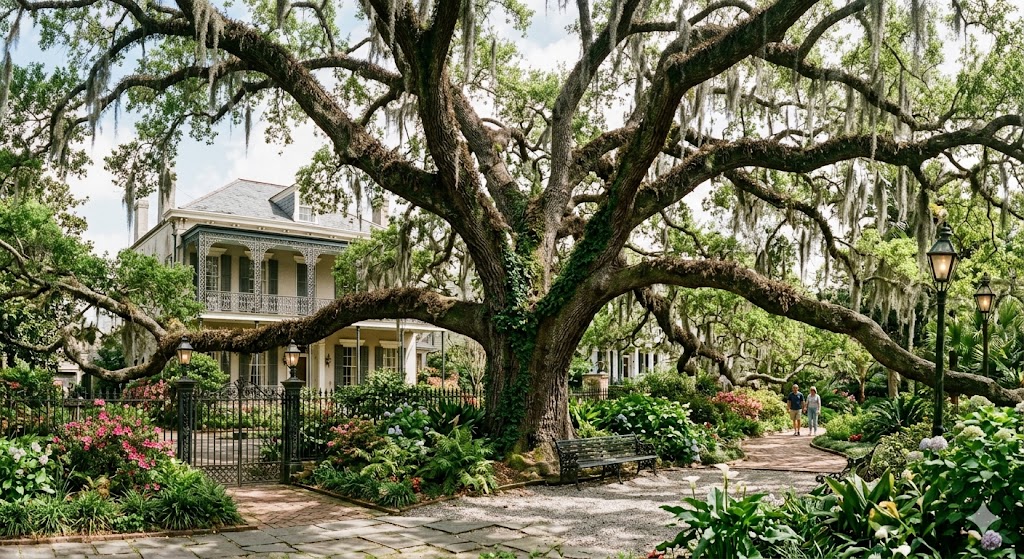
In the humid, sun-drenched landscape of New Orleans and Metairie, few things define the soul of the city like the Southern Live Oak (Quercus virginiana). These massive, sprawling giants are more than just vegetation; they are living historical monuments that have witnessed centuries of growth, storms, and cultural shifts. For a homeowner, owning a property with a mature Live Oak is both a prestigious honor and a significant responsibility. These trees can live for hundreds of years, but their survival in an urban environment depends heavily on human intervention and informed care.
The iconic silhouette of the New Orleans Live Oak, characterized by low-hanging, heavy horizontal limbs, is a masterpiece of natural engineering. However, the same features that make them beautiful also make them vulnerable to the pressures of city life, such as sidewalk paving, utility lines, and the extreme weather events typical of the Gulf Coast. Understanding how to co-exist with these legends is the first step in ensuring they remain for future generations.
The Hidden World of the Root Zone
The most common mistake homeowners make is assuming the tree ends where the trunk meets the dirt. For a Live Oak, the root system is a shallow, wide-reaching network that often extends two to three times the width of the branch spread. In the tight confines of New Orleans neighborhoods like Uptown or the Garden District, these roots are constantly fighting for space with foundations, pipes, and driveways.
Soil compaction is the primary silent killer of urban oaks. When cars park under the shade of a tree or when heavy equipment is used during a home renovation, the tiny air pockets in the soil are crushed. This prevents oxygen and water from reaching the roots, leading to a slow decline that may not show symptoms in the canopy for several years. Protecting the root flare, the area where the trunk expands at the base, is critical. Covering this area with too much soil or mulch can trap moisture against the bark, inviting fungal rot that can destabilize the entire structure.
Pruning for Health and Storm Resilience
In Louisiana, we do not prune trees just for looks; we prune for survival. Proper maintenance for a Live Oak involves thinning the canopy to allow wind to pass through more easily during tropical storms or hurricanes. This reduces the sail effect, where a dense canopy acts like a giant kite, potentially pulling the tree over in high winds.
Standard topping or lion-tailing (removing all inner foliage and leaving only tufts at the ends of branches) is catastrophic for Live Oaks. These practices stress the tree, encourage weak water sprouts, and leave the long, heavy limbs vulnerable to snapping. Instead, professional pruning focuses on removing deadwood, crossing branches, and limbs that interfere with structures, all while maintaining the tree’s natural, balanced form. Because these trees are often protected by local laws, such as those enforced by the New Orleans Department of Parks and Parkways, any significant pruning often requires a permit and the oversight of a licensed professional.
Epiphytes: Moss and Ferns
New Orleans residents often worry about the grey curtains of Spanish moss or the green carpets of Resurrection fern that adorn oak limbs. It is important to remember that these are epiphytes, not parasites. They use the tree for physical support but do not suck nutrients or water from the wood. In most cases, they are perfectly harmless and add to the historic aesthetic of the landscape. However, if Spanish moss becomes extremely thick on a weakened tree, it can add significant weight and wind resistance during a storm. A light thinning of the moss is usually sufficient to address this without harming the ecosystem.
Managing Construction and Development
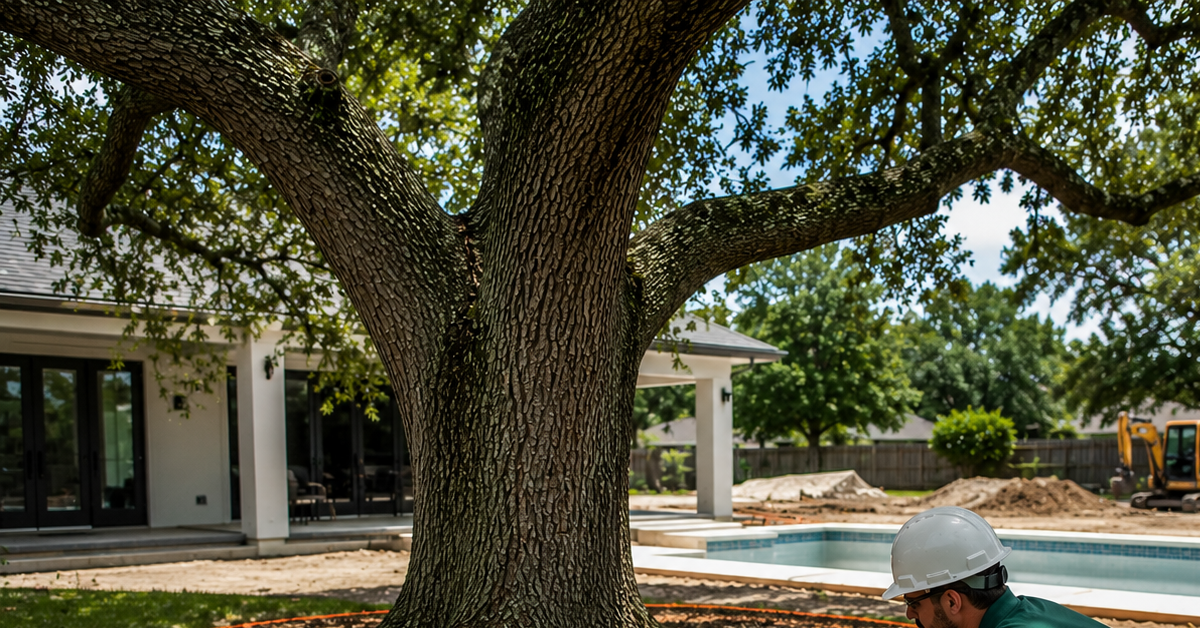
If you are planning an addition to your home or a new driveway near a historic oak, preservation should be your priority. Louisiana law often requires a tree preservation plan before construction permits are issued. This involves installing sturdy fencing around the critical root zone to keep trucks and materials away from the sensitive earth. In some cases, an arborist may recommend air-spading to safely expose roots or installing specialized aeration systems to mitigate the impact of new paving. Proactive planning is far less expensive than trying to save a dying 200-year-old tree after the damage is done.
The Importance of Hazardous Tree Assessments
Internal rot and structural defects can be difficult to spot until a limb is already on the ground. Mature Live Oaks can develop hollows or large cracks that stay hidden behind lush foliage.
Tools for Detecting Internal Decay
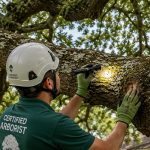
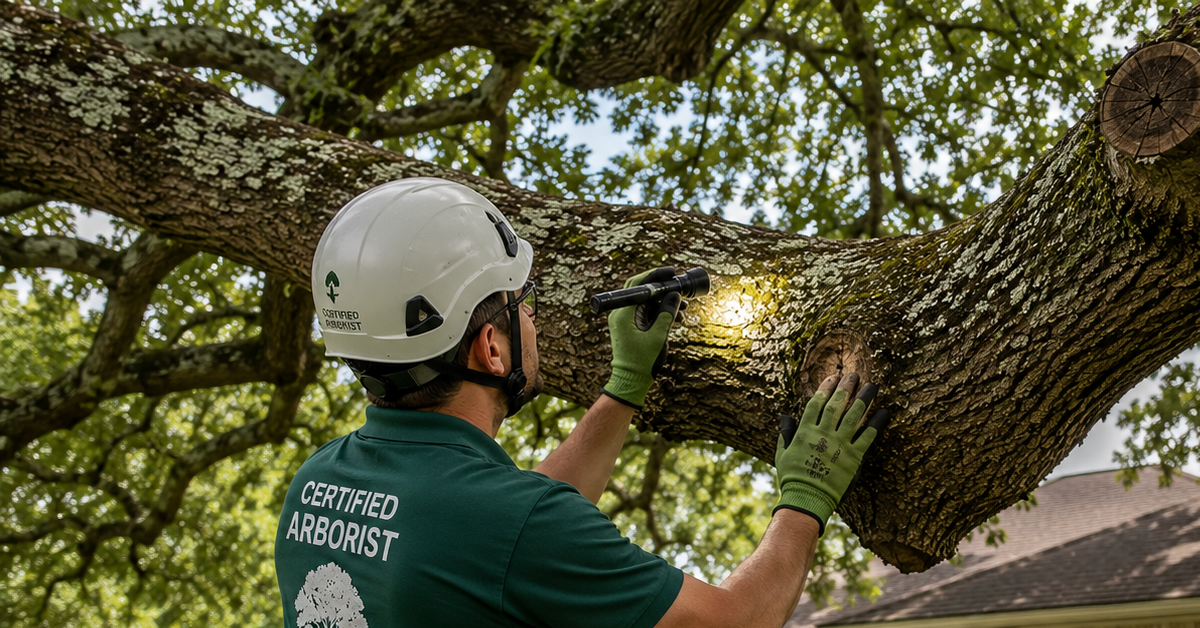
Professional assessments use tools like mallets for sounding or specialized density sensors to check for heart rot. Identifying a weak union or a hollow trunk early allows for mitigation strategies like cabling and bracing, which can provide the extra support needed to keep a historic limb from failing.
At A Perfect Cut Tree Service, we treat every New Orleans Live Oak like the historic treasure it is. With 40 years of tree care experience, our team provides the specialized expertise required to maintain Louisiana’s living legends safely and professionally. As a New Orleans Homes Magazine 2018 Best Tree Service winner, we take a non-invasive approach to tree maintenance & preservation, prioritizing preservation and long-term health over quick fixes. Our staff includes ISA Certified Arborists who are experts in hazardous tree assessment, storm prep, and navigating the complex world of local construction permitting. Whether you need precision tree & shrub pruning for an ancient oak in Metairie or emergency cleanup after a Gulf storm, we are licensed, bonded, and insured to handle every job with the highest standards of safety and care. We have served thousands of satisfied clients across the Greater New Orleans area, ensuring their landscapes remain beautiful and their homes stay protected. Connect with us at – (504) 732-0779.
Frequently Asked Questions by Homeowners in New Orleans
1. Do I need a permit to trim a Live Oak in New Orleans?
Yes, if the tree is in the public right-of-way or meets certain size requirements on private property, a permit is often mandatory.
2. How often should a mature Live Oak be pruned?
Generally, a health and safety check every three to five years is recommended for mature trees.
3. Is Spanish moss killing my oak tree?
No, it is an epiphyte that lives on the bark surface and does not take nutrients from the tree.
4. Can I pave over the roots of my oak tree?
Paving directly over roots can suffocate them. If you must pave, use porous materials and consult an expert first.
5. What is deep root fertilization?
It is a process where liquid nutrients are injected into the soil at high pressure to reach the root system directly and alleviate compaction.
6. Why are the leaves on my oak turning brown in the spring?
Live Oaks are semi-deciduous and actually drop their old leaves in the spring as new growth emerges.
7. What should I do if my oak tree has a large hollow?
A hollow does not always mean the tree is dying, but it requires a professional assessment to check for structural stability.
8. Can Live Oaks survive a hurricane?
They are among the most wind-resistant trees in the world, but proper pruning significantly increases their survival rate.
Summary Checklist: Maintaining Historic Oaks
| Condition | Risk Level | Recommended Action |
|---|---|---|
| Vertical split in the main trunk | Critical | Immediate professional structural assessment is required to determine whether stabilization or removal is the safest option |
| Split limb over a roof | High | Arrange urgent hazard mitigation to protect the structure and occupants from branch failure |
| Deep crack with visible decay | High | Schedule an expert inspection to assess internal deterioration, cavity formation, and structural integrity |
| Hairline fracture in a young tree | Moderate | Monitor progression and consider corrective structural pruning if the defect worsens |
| Broken branch in the upper canopy | Variable | Have damaged branches professionally pruned back to an appropriate healthy attachment point |
Final Advice
If you notice any of these warning signs, do not wait for a storm to force the issue. A professional assessment from an arborist can determine if the tree can be saved through specialized care or if it must be removed to protect your property. Maintaining a Live Oak is a marathon, not a sprint. Focus on long-term soil health and avoiding sudden changes to the tree’s environment. If you are buying a home with a historic tree, have it inspected just as you would the house foundation. Small investments in cabling, bracing, or specialized fertilization can extend the life of a Live Oak by decades, ensuring that your property continues to benefit from its shade and historical value. Never allow an unlicensed worker to climb your tree with spikes, as this creates wounds that invite disease. By following modern arboricultural standards and respecting the sensitive nature of the root system, you can ensure your living legend thrives for another century.