March 24, 2026
When winter arrives in New Orleans, your trees enter a quiet but crucial phase of their annual cycle. Tree dormancy is a survival mechanism where metabolic activity slows dramatically, growth ceases, and trees conserve energy to withstand environmental stresses, similar to hibernation in animals. This period offers a unique window for maintenance tasks that would stress or harm trees during active growing seasons.
Many homeowners mistakenly believe that dormant trees require no attention. In reality, winter presents ideal conditions for specific care activities that strengthen structure, prevent disease, and prepare your landscape for the demands of another Gulf Coast growing season. This guide explains what dormancy means for New Orleans trees and provides practical steps to maximize tree health during this critical period.
Key Takeaways
- Dormancy timing varies: New Orleans trees experience semi-dormancy from late December through February, with deep dormancy in January-February providing the safest window for major pruning.
- Structural work is best in winter: Leafless branches reveal problems clearly, wounds close before spring stress, and disease transmission risks drop significantly during cold months.
- Root zones stay active: Despite above-ground shutdown, roots continue functioning in mild winters, making this ideal for soil improvements and amendments.
- Species-specific timing matters: Live oaks should be pruned in late January-February to avoid oak wilt vectors; spring-flowering trees lose blooms if pruned during winter dormancy.
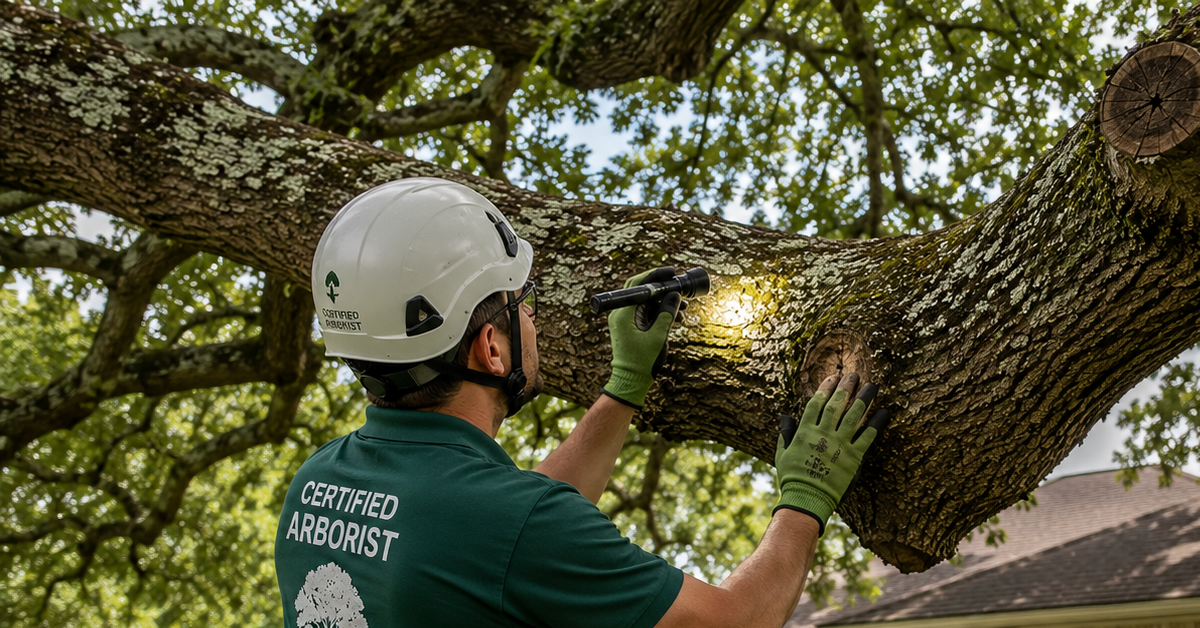
- Professional assessment prevents damage: Certified arborists identify structural issues invisible to homeowners and execute pruning that strengthens rather than weakens trees.
Reviewed by a Certified Arborist
A Perfect Cut Tree Service brings decades of experience caring for Southeast Louisiana landscapes. Our certified arborists understand the unique conditions affecting trees in our region and provide expert guidance on seasonal maintenance.
Understanding Tree Dormancy in the New Orleans Climate
Dormancy functions as a survival mechanism, allowing trees to weather environmental stresses that would damage actively growing tissue. According to the USDA Forest Service, this physiological state involves complex hormonal changes that protect cells from freezing damage and conserve resources when conditions don’t support photosynthesis.
Unlike harsh northern winters that force a complete shutdown, New Orleans experiences mild temperatures that allow semi-dormancy in many species. Most deciduous trees lose leaves and slow growth between December and February, while evergreens maintain foliage but significantly reduce metabolic activity.
I remember inspecting a client’s property in Mid-City last January during an unseasonably warm spell, temperatures hit 75 degrees for three consecutive days. Their Japanese magnolias had already started pushing out flower buds, a full month early. Two weeks later, a hard freeze damaged all those premature blooms. The trees survived, but the owners lost that year’s spectacular display.
Temperature patterns matter more than specific dates. When nighttime lows consistently drop into the 40s and daytime highs remain below 60 degrees, trees interpret these signals as winter conditions. The LSU AgCenter notes this typically occurs from late December through February in our area, though unseasonably warm spells can disrupt the pattern.
Native species like live oaks, bald cypress, and sweetgum have evolved to function with our mild winters. These trees often experience shorter, less complete dormancy than the same species growing in colder regions. Non-native ornamentals may struggle with insufficient chilling hours, the cumulative time below certain temperatures needed to break dormancy properly.
Essential Dormant Season Maintenance Tasks
Winter maintenance strengthens trees while minimizing stress and disease risk. Several critical activities should only be performed during dormancy.
Professional Pruning and Structural Correction
Dormancy provides the optimal window for significant pruning work. Without leaves obscuring branches, arborists can clearly see the tree’s structure and make precise cuts that improve long-term health and safety.
Last winter, we worked on a massive water oak in Lakeview that had developed three co-dominant stems, essentially three trunks competing for space. The homeowner had ignored it for years, but after Hurricane Ida, she realized the vulnerability. During deep dormancy in mid-January, we removed the weakest stem and installed flexible cabling on the remaining two. The tree leafed out beautifully that spring, and the wound compartmentalized perfectly.
Structural pruning addresses architectural problems that compromise stability. Co-dominant stems create weak attachments prone to splitting. According to the International Society of Arboriculture, removing one leader while the tree is dormant allows wound closure before the stress of spring growth arrives.
Crown thinning selectively removes branches throughout the canopy to improve light penetration and air circulation. The Texas A&M Forest Service emphasizes that this reduction in wind resistance proves especially valuable in hurricane-prone regions. Proper thinning never removes more than 25% of the living canopy and maintains the tree’s natural form.
Deep Root Zone Care
While above-ground growth stops, root systems remain surprisingly active during mild winter months. This makes dormancy an excellent time for soil improvements that benefit the entire tree.
Soil testing reveals nutrient deficiencies, pH imbalances, and compaction issues that limit root function. The Mississippi State University Extension recommends testing during winter to allow time for implementing corrections before spring growth demands maximum nutrient uptake.
We performed vertical mulching on a declining live oak in the Garden District two winters ago. The tree had been surrounded by new hardscaping that compacted the soil severely. After creating 40 aeration holes filled with composted pine bark and mycorrhizal inoculant, the tree’s canopy density improved dramatically by the following summer.
Organic mulch application protects roots from temperature fluctuations while gradually improving soil quality as it decomposes. Apply 2-4 inches of shredded hardwood or pine bark in a broad ring extending to the drip line. Keep mulch several inches away from the trunk to prevent moisture accumulation and decay.
Disease Prevention and Treatment
Many tree diseases spread through spores released during warm, humid conditions. Dormant season treatment interrupts disease cycles and prevents outbreaks when conditions favor pathogen activity.
Fungal infections like anthracnose, oak wilt, and various leaf spots overwinter in infected tissue and fallen leaves. Removing diseased branches during dormancy eliminates inoculum sources before spring rains trigger new infections. The USDA Animal and Plant Health Inspection Service notes that properly timed fungicide applications protect susceptible species during the vulnerable period of bud break.
Species-Specific Dormant Care Guidelines
Different tree types require tailored approaches to winter maintenance. Understanding species-specific needs ensures appropriate care.
Live Oak Management
Live oaks, New Orleans’ signature tree, exhibit unusual dormancy patterns. These evergreens retain most foliage year-round but experience a brief semi-dormant phase in late winter when they drop old leaves and initiate new growth.
The ideal pruning window occurs in late January through February, after holiday decorations come down but before the spring flush begins. According to the Texas Forest Service Oak Wilt Program, avoiding summer pruning when oak wilt vectors are active is critical. This fatal disease spreads through nitidulid beetles attracted to fresh pruning wounds during warm months.
I learned this lesson early in my career. A client insisted we prune their live oak in July because they were hosting an outdoor wedding. Against my recommendations, we proceeded. Three months later, the tree showed oak wilt symptoms. That $800 pruning job ultimately cost the homeowner a $15,000 tree removal. I never compromise on timing now.
Crape Myrtle Care
Crape myrtles fully defoliate during winter, making their structure clearly visible. This deciduous species responds well to dormant pruning that enhances flowering and maintains attractive form.
Proper pruning removes crossing branches, opens the center for air circulation, and eliminates weak growth. Avoid “crape murder”, the destructive practice of cutting trunks to uniform heights. The LSU AgCenter specifically warns against this practice, noting it produces weak sprouts and increases disease susceptibility.
Avoiding Common Winter Care Mistakes
Well-intentioned homeowners often damage trees through inappropriate winter activities. Understanding what not to do proves as important as knowing correct practices.
Topping, indiscriminately cutting main branches to stubs, ranks among the most harmful practices. We’re regularly called to address toppled trees. Last February, a Metairie homeowner hired a “tree guy” who topped their Bradford pears to “make them safer.” Within two growing seasons, each cut had produced 15-20 vertical shoots growing 6 feet tall. The tree now had exponentially more failure points than before.
Flush cuts that remove the branch collar eliminate the tree’s natural protection zone. Proper cuts preserve the slight swelling where branches attach to trunks. This tissue contains chemical compounds that prevent decay from entering the main stem.
When Professional Help Becomes Essential
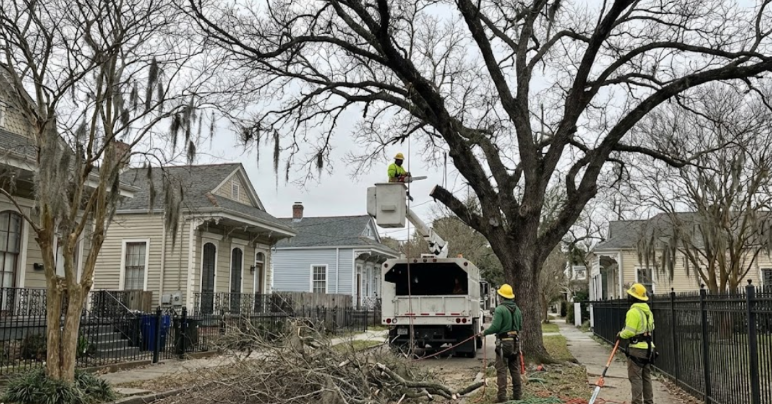
Certain situations require expertise beyond typical homeowner capabilities. Large trees with decay, cracks, or concerning lean angles need professional evaluation using specialized diagnostic tools. Trees near power lines create electrocution hazards for untrained workers.
Professional-grade pruning equipment, pole saws, climbing gear, and bucket trucks enable efficient work while protecting trees and property. Comprehensive liability insurance and workers’ compensation coverage protect property owners from financial responsibility when accidents occur.
A Perfect Cut’s team holds ISA certification, demonstrating proven knowledge of arboriculture standards. We use systematic evaluation protocols to assess tree condition and recommend solutions that balance safety, property value, and landscape aesthetics.
Common Questions About Winter Tree Care
When is the best time to prune trees in New Orleans?
Deep dormancy in January and February provides the safest window for most species. Live oaks should be pruned in late January through February to avoid oak wilt transmission. Spring-flowering trees like dogwoods should be pruned immediately after flowering, not during winter, to preserve flower buds.
Can I fertilize my trees during winter dormancy?
Avoid fertilizing during dormancy as trees cannot utilize added nutrients when metabolic processes are minimal. Premature growth triggered by fertilization becomes susceptible to late frost damage. Reserve fertilization for early spring when active growth begins.
How do I know if my tree is truly dormant or dead?
Dormant trees show no leaves but retain flexible twigs with viable buds. Scratch bark near branch tips; green tissue underneath indicates life. Dead branches snap easily and show brown, dry tissue when scratched. Professional assessment provides definitive answers for uncertain cases.
Should I water trees during winter in New Orleans?
Established trees rarely need winter watering in New Orleans due to adequate rainfall and reduced transpiration. Newly planted trees or those in protected locations may benefit from occasional deep watering during extended dry periods exceeding two weeks.
What causes trees to break dormancy too early?
Unseasonably warm temperatures trigger hormonal changes that initiate bud break. New Orleans’ variable winter climate creates frequent false springs. Once growth begins, subsequent freezes damage tender new tissue. Proper species selection for our climate reduces this risk.
Winter Is the Safest Time to Strengthen Your Trees
Dormant season care represents one of the most valuable investments in long-term tree health. Professional evaluation identifies problems before they worsen and recommends appropriate interventions while conditions favor tree recovery.
A Perfect Cut provides comprehensive dormant season assessments and maintenance services throughout New Orleans, Metairie, Kenner, Slidell, and the Northshore. Our certified arborists understand local species, climate challenges, and best practices for Southeast Louisiana landscapes.
Contact us today for a free consultation. Visit www.aperfectcuttree.com or call to schedule your winter tree care assessment.